The layout of the paleontology room at the Val Sanagra Museum has made it possible to reconstruct the events that preceded the Discovery of the fossiliferous content of the Alpe Logone deposit..
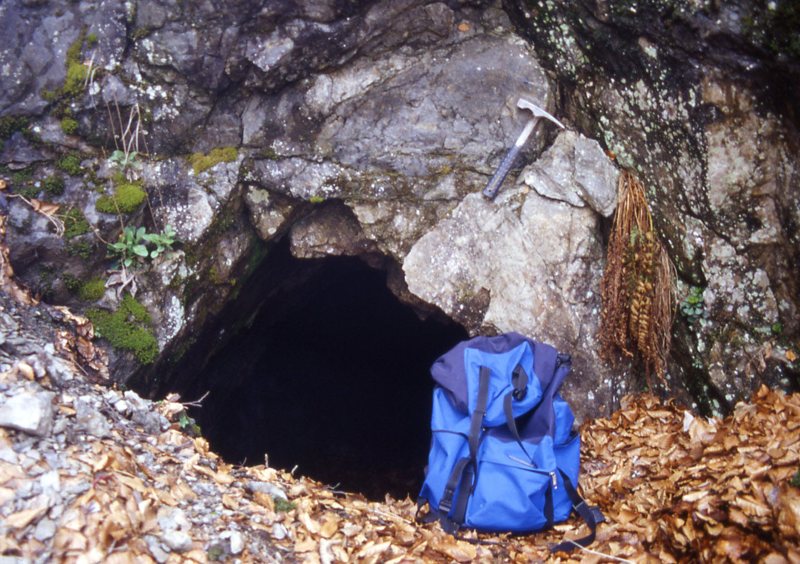
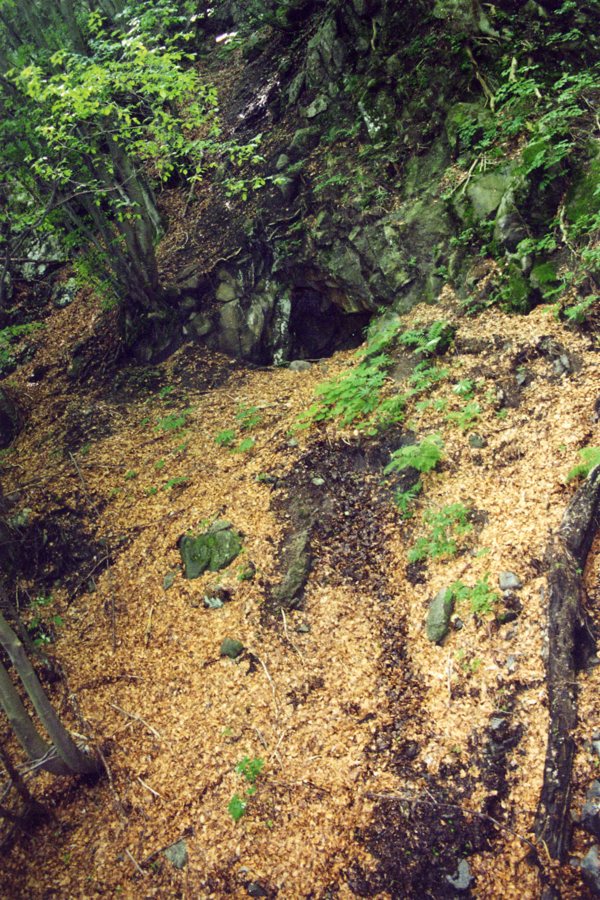
As has already been described in other publications, the Grandola fossiliferous deposit is located in the coal valley (also known as the Carbon Valley), a gully (about 1090 m) that descends from Alpe di Logone and enters the Sanagra valley opposite Mt. Grona. In reality, this valley was formerly mapped as the Gariasca Valley, a toponym ignored by scholars who have dealt with the fossiliferous findings of the Sanagra.
Historical sources allow us to accurately reconstruct the events that led to the discovery of fossils in the Sanagra Valley: in the 1947 publication by Venzo and Maglia Luigi Maglia is credited with the discovery of the first fossil specimens.
Luigi Maglia, a mining surveyor assigned to conduct geological inspections in the Sanagra Valley, Carries out an initial survey in the Gariasca Valley in the summer of 1939. On this occasion he discovered the first plant fossils as reported in the 1947 publication (Venzo & Maglia, 1947): "first, Maglia found a Calamites (fossil of a vegetable), which he gave, in 1940, to the Palanchini collection, of Bergamo. In 1941, Cav. Bianchi of Naggio, carried out, in the gully, tunnel work, to ascertain, for industrial purposes, the extent of the carboniferous deposit .....".
The search for bibliographic sources regarding the history of the deposit has added a new piece to the events leading up to the discovery of the fossiliferous outcrop. This new information was acquired from the documents of Cavalier Bianchi's enterprise., coincidentally received by the History Nature and Life Association by courtesy of a member of it (Mr. Mario Selva), a relative of Cavalier Bianchi.
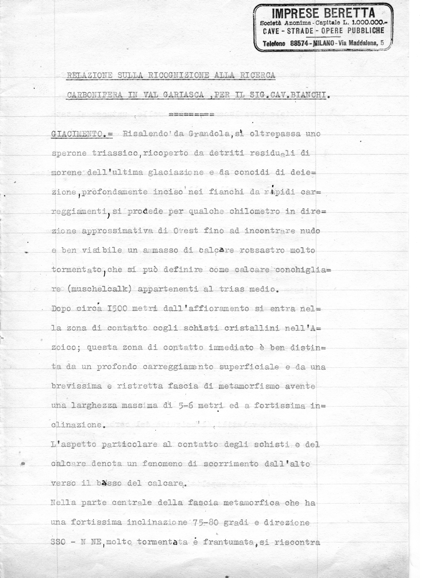
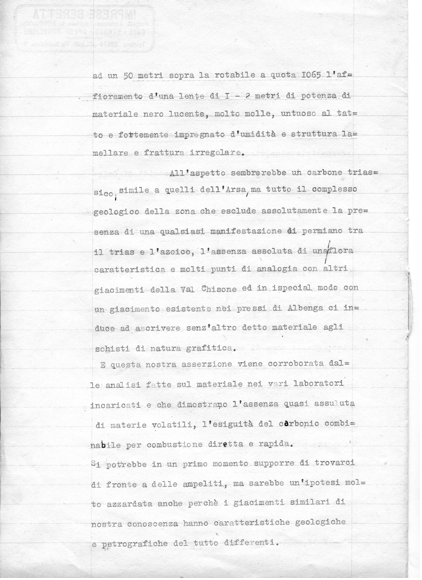
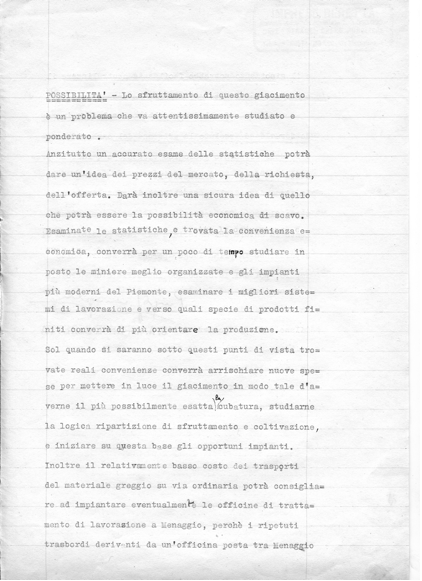
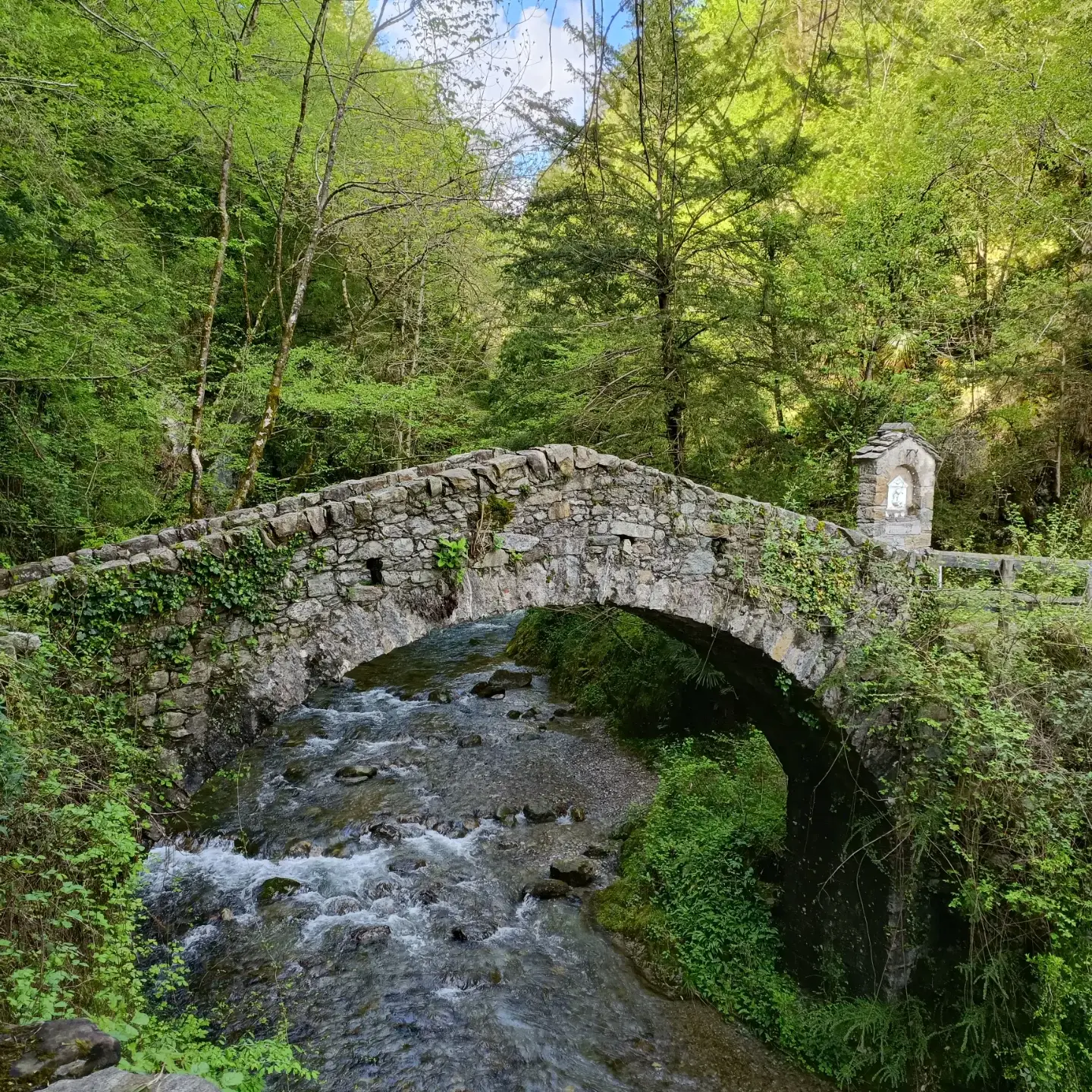
The documents contain a Geological survey carried out on site by the former Milan-based Impresa Beretta and a series of Notebooks in which all the balances of mining activity at Alpe di Logone are noted.. The geological survey of the carbonaceous material, dated 1928, shows that the Logone Alp outcrop was already known before 1939, in fact, the discovery occurred during the construction of the Rolling road that was intended to connect the Sanagra Valley to the Cavargna Valley (road present today). The road was built in 1916/1918 by Cavalier Bianchi himself, who worked in collaboration with the military engineers. A brief mention regarding Cavalier Bianchi's discovery was made by Magnani (Magnani, 1945) who with great honesty recalls: "the first discovery was in 1916 during the construction of the military road in the Sanagra valley by Mr. G. Bianchi. However, this remained ignored for science."
At present, the route layout intersects the carbonaceous lens, so it is certain that the outcrop emerged during the excavation of the rolling road.
Following this event, ten years later, Cav. Bianchi commissioned the above-mentioned survey from Impresa Beretta of Milan, which, regarding the possible exploitation of the mineral resource, stated: "concluding we must formally and absolutely rule out the presence of the useful coalfield in the geological horizon visited and thus the presence of the valuable fuel".
On the understanding that Cav. Bianchi was aware of the presence of carbonaceous flaps in the Sanagra Valley, the reasons that prompted the developer to exploit a deposit whose use was discouraged still remain unclear.
A possible answer to this question is given in the work of Belloni (Belloni L. M., 2001), the author suggests that the incentive of local resource exploitation should be placed historically in the political framework of the time.
In fact, as Belloni says: "between 1937 and 1938, Italy thus reacted by mobilizing its resources by boycotting foreign product to the economic and financial sanctions imposed on it on November 18, 1935, at the beginning of the Ethiopian enterprise, by the Geneva-based 'League of Nations'".
Whatever the course of events, it remains ascertained from the documents that mine operations begin on February 16, 1942, following an inspection conducted 5 days earlier.
The unfolding of events reasonably suggests that there was contact between Cav. Bianchi and Maglia prior to the start of the work, or even that it was Cav. Bianchi himself who commissioned Maglia to carry out the 1939 inspection.
It is equally plausible that from 1928, (the date of the survey), to 1939 Cav. Bianchi accepted the negative conclusions of the survey and abandoned the idea of exploiting the mineral resources of the Gariasca Valley.
The changing political environment described by Belloni may have influenced Cav. Bianchi by convincing him to start extraction work. At this stage of indecision the impresario would seek the advice of another expert in the field, deciding to commission Luigi Maglia.
The arrival of the Jersey and the fossil discovery may have led Maglia himself to "encourage" Cav. Bianchi in the possible exploitation of the outcrop.
What historical sources give for certain is the return of the Maglia while the mines were still in operation; in fact, the first collection of 12 specimens given to the Museum of Natural History in Milan was followed in 1945 by a sample collection of 2,000 pieces studied by Sergio Venzo, then Director of the Milan Museum.
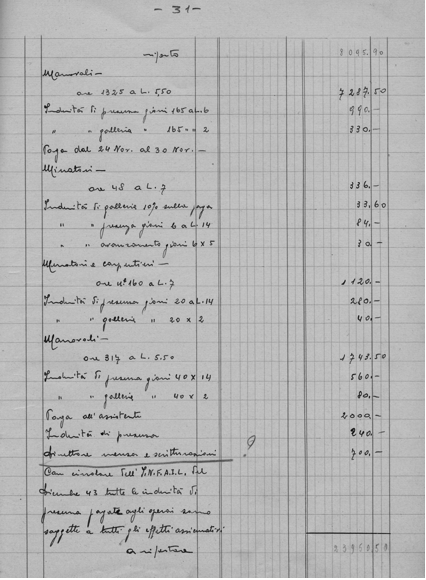
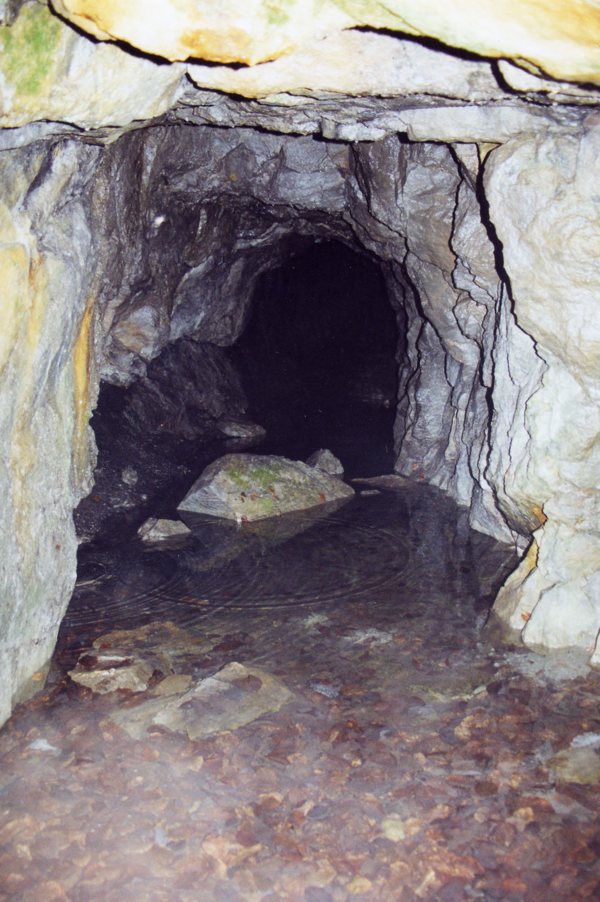
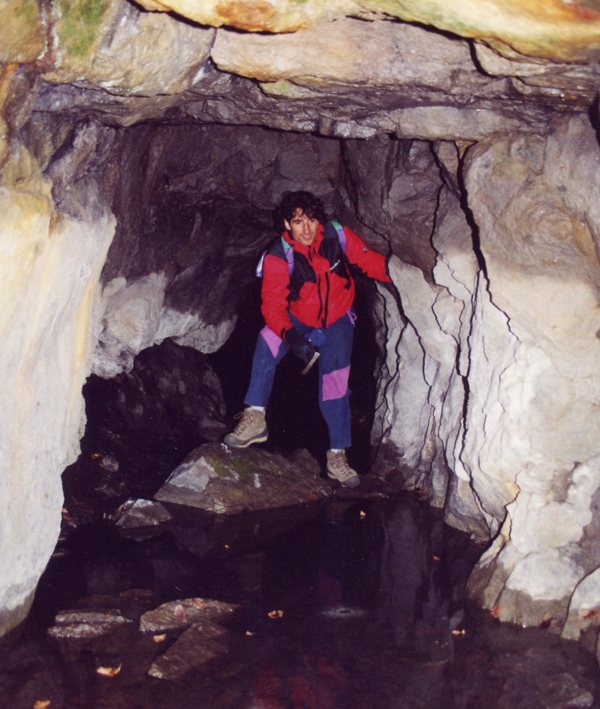
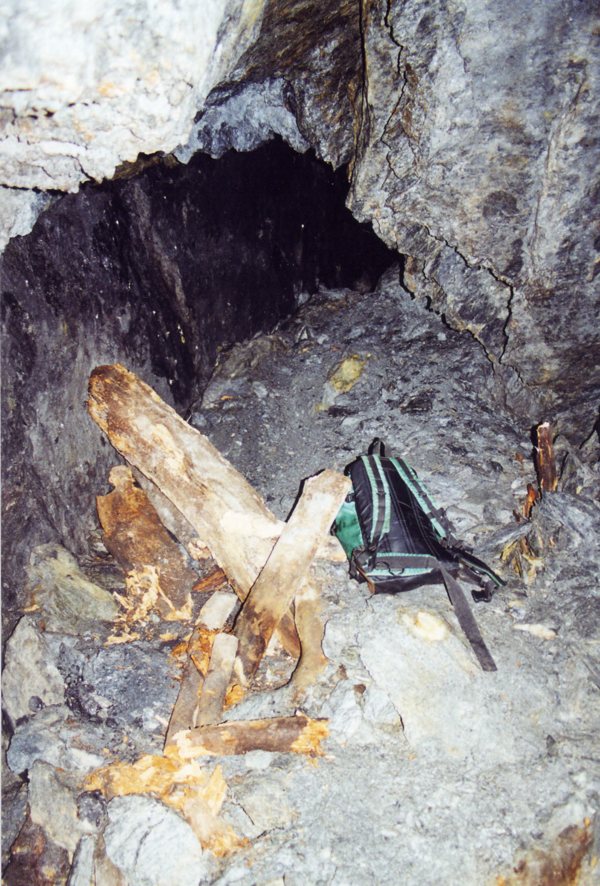
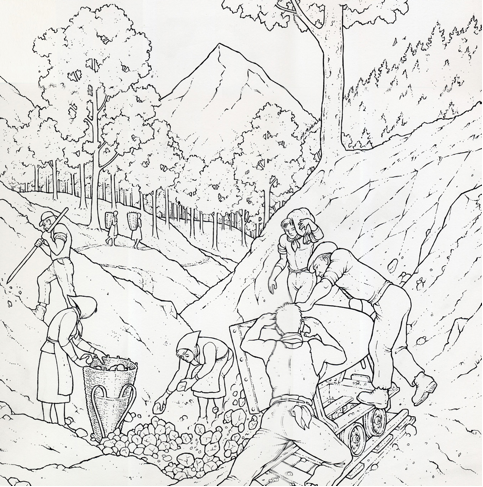
The study of the diaries left by Cav. Bianchi to the family of Mario Selva has also made it possible to learn in greater detail about the events that took place in the course of the mines' activities and the result of the exploitation of the ore. In the galleries, dug manually with the help of workers from Grandola, Val Cavargna and Bergamo, the tracks needed to transport the material with the help of wagons. Women (possibly from the Cavargna Valley) were in charge of sorting and transporting anthracite, which was then loaded onto panniers and carried downstream. The material, transported by the women, was embarked via the lake and put to various uses.
Verbal sources recall that Val Sanagra coal had poor yields as it burned with difficulty, the statement finds reliability in the mineralogical characteristics of the rock: anthracite layers exhibit Significant seepage of clays and sandstones, which make combustion difficult.
The mediocre qualities of anthracite from the Sanagra Valley were emphasized by the Magnani (Magnani, 1945): "the anthracite extracted from the modest Val Sanagra deposit is of very poor quality, it is schistose, friable, it breaks up into minute shiny flakes, it is somewhat graphitic. The concessionaire of the exploration permit kindly informed me of the following analysis, which reflects the average qualities of the fuel quite well: Fixed carbon 34.3 % - Ash 58.2 % - Volatile matter 2.8 % - Moisture 4.6 %. Calorific value at Mahler bomb: 3488 calories."
The impurities in anthracite changed its fate vis-à-vis use, in fact the material was recycled to make combustion bricks, also used To power the railroad train which connected Menaggio-Grandola and Porlezza.
Mr. Abbondio Secchi recalls the years of firebrick making: "the coal from Val Sanagra was reduced to minute fragments that were mixed with tar, I remember very well this activity carried out in my current home (Via Galbiati, Grandola ed U., Fraz. Cardano) at the time owned by Mr. Camozzi.
The two processors used a machine that acted as a mold to make the brick. This was the last expedient adopted in an attempt to exploit anthracite from the Sanagra Valley.
Unfortunately, the ore gave no yield because of too many impurities, and again the outcome was negative. Attempts were made to use them to power the railroad locomotive or to heat homes. Some of the bricks remained in my old barn for a long time, then I had to throw them away!"
Coal mining in the Sanagra Valley continued until September 1944.
Despite the large number of people involved (recall that there was also a canteen run by a kitchen worker), and contacts with the Cities of Como, Sondrio, and Milan, the mines' balance sheet showed a loss: at the close of business the profit earned amounted to £54,336, expenses to £241,017.
Workers' wages are shown below.
HOURLY PAYS. | |
CARPENTERS:£ 6 | HANDHOLDERS:£4.5 |
MINERS: £5.5 | ASSISTANTS:£ 7 |
It should be noted that attendance and gallery allowances equal to 10% of pay were applied.
A failed attempt by Cav. Bianchi uncovered the Como Province's oldest fossiliferous deposit, the specimens collected were carefully studied by Sergio Venzo, then Director of the Milan Museum, studies channeled into one of the most interesting publications in local paleontology. This article was intended to honor the memory of four men (S. Venzo, L. Maglia., C. Bianchi and M. Magnani) researchers whose contributions made known a new reality of the Sanagra valley useful to the writer to carry out new research and to realize the paleontological room of the Grandola Museum.
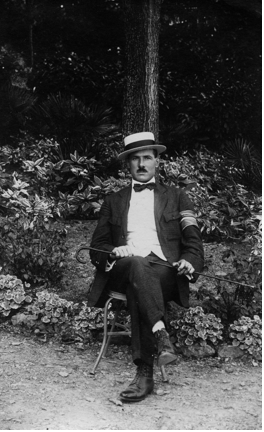
Biography of Cav. Bianchi
Cav. Carlo Giacomo Bianchi, a building contractor known as Santino, was born June 13, 1884, in Naggio, a hamlet of Grandola ed Uniti. He completed numerous works in Valtellina, including the Cancano dam.
Passionate about nature and hiking, he became interested in the exploitation of Alpe di Logone, following a fortuitous discovery made in 1918 during construction work on the rolling road he was building in the Gariasca Valley, in collaboration with the military engineers.
Geological survey and annotations by Cav. Bianchi