Recently reported rare species
They will be listed below Floristic reports concerning rare or endemic species, the findings derive from research carried out by the writer in Val Sanagra and some areas of the western Lario. It should be pointed out, particularly for endemics, that. Western Lario is very interesting for the study of endemic flora; suffice it to say that the distribution of most Insubric endemics and subendemics has this territory as its extreme limit. Since Canton Ticino does not have many of the species in question, botanists have pointed out a "Ticinense floristic gap."
In addition to endemics, special attention was paid to species with a point distribution range, at least as far as the western Lario is concerned.
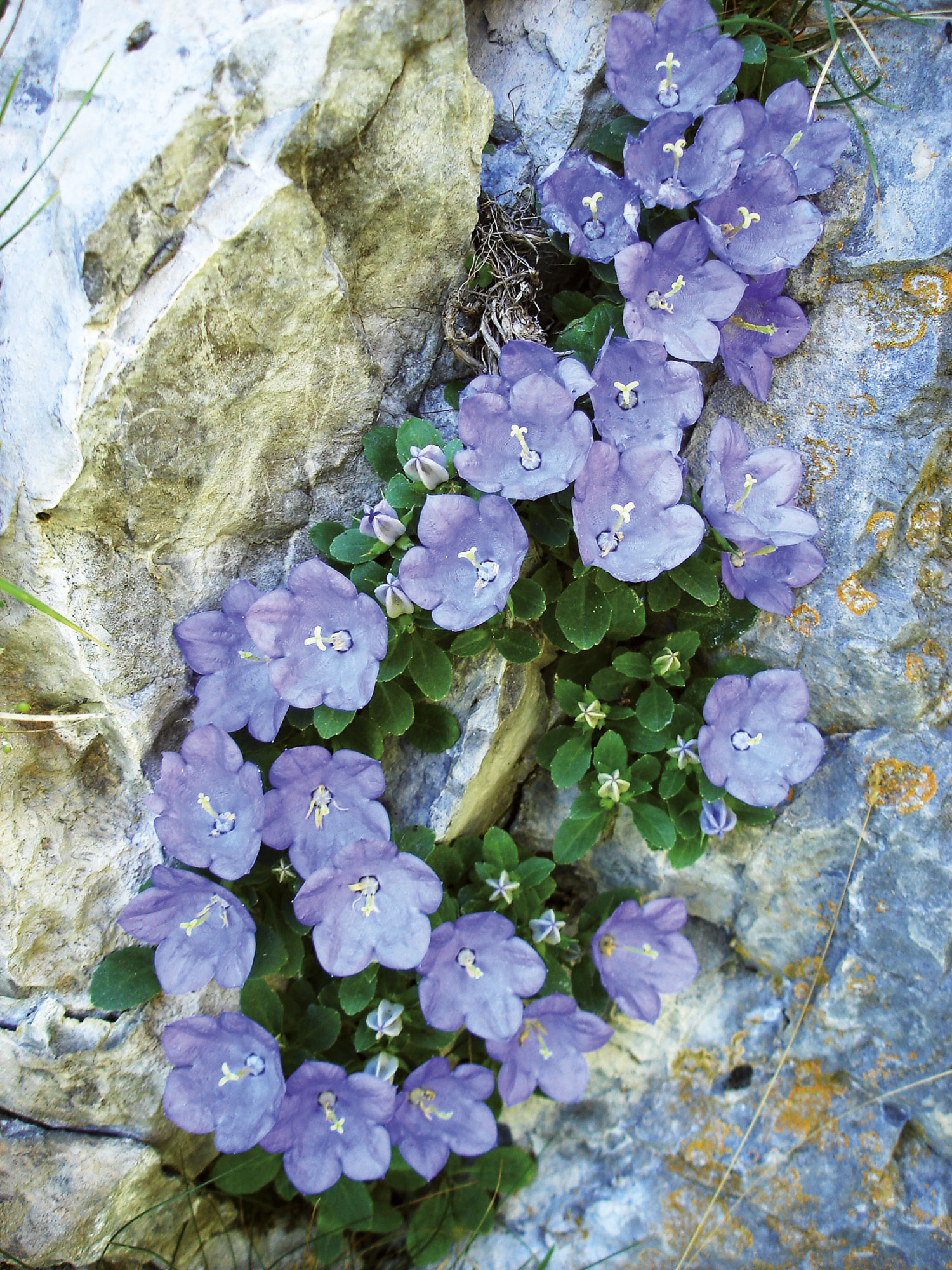
Archduke Raineri's Campanula (Campanula Raineri Perpenti)
Globally, the distributional range of this species extends between Lake Garda and Lake Como, pushing into the Vicenza area. Campanula raineri is a perennial plant., formed by leafy, uniflorous stems, forming small bushes that protrude from soil-free crevices.
The cauline leaves are alternate, elliptical with small notches; the dark blue-purple flower is very large (3-4 cm).
Distribution: Monte Grona, below the summit at 1736 m (Pisani, 1986 - Selva, 2000 - Comolli, 1834); "Fra gli scogli...del Sasso Rancio vicino alla Gaeta" (Comolli G., 1834), now absent; Monte Generoso (Koch, 1844 - Penzig, 1879 - Franzoni, Lenticchia and Fravat in 1890). Already between 1825 and 1829 its presence is questioned by Fiori. Becherer in 1960 does not find it and even Schröter in 1950 states, "today it is no longer found there."
Subsequent reports concern two sectors of Mount Pidaggia (m 1528) close to Val Sanagra: the species thrives at Sasso di Cusino at the ballast in front of the village of the same name at elevation 1000 (Selva, 2001) and the slope facing Alpe di Logone (m 1184) in Cusino territory (Selva, 2002). The dolomite spires seen from Alpe di Malé harbor a population of Campanula raineri that seems to reconnect with that described for Sasso di Cusino (m 1328).
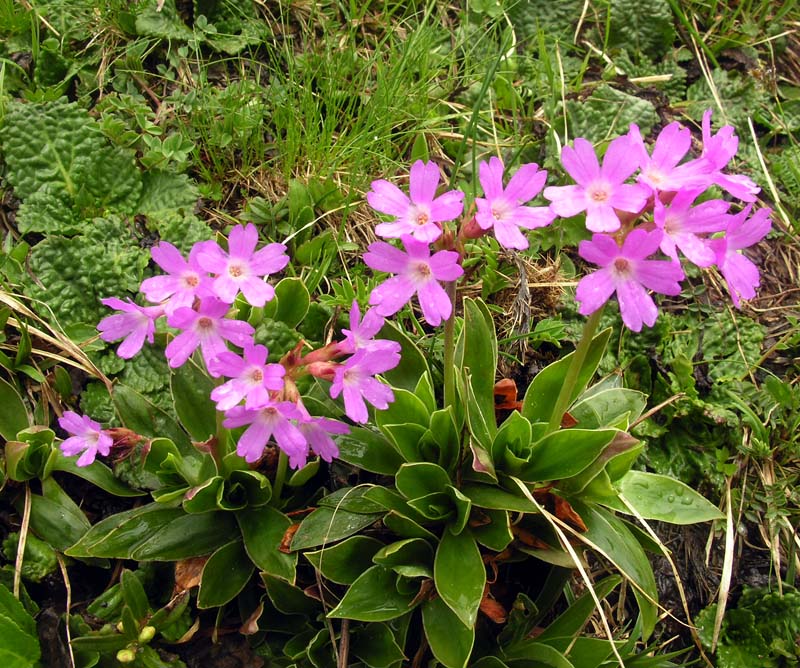
Primrose of Lombardy (Primula Glaucescens Moretti)
La Glaucous primrose is distributed between the western shore of Lake Como in the west and the southern sector of the Mount Adamello massif (Val Daone) in the east, disjunct from the main Lombardy range. It is related to Primula spectabilis, a species with an eastern distribution.
Distribution: Monte Grona (Comolli, 1834); Griante (Comolli, 1834); Valsolda: Cima Sgaravò (1385 m), elevation 1330 m (Antonietti, 1985).
At present the species grows in Valsolda and Val Sanagra on the slopes of Mount Pidaggia, between the Gottro Mountains and Alpe di Logone at 1100 m (Selva, 2000). This station continues behind the top of the mountain on the slope facing the Alpe di Malè (m 1201). The Valsolda station is currently the Western limit of distribution.
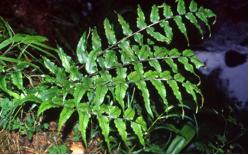
Falcate fern (Cyrtomium Fortunei Presl)
This very rare fern was reported in the floristic monograph of Pignatti, (Pignatti, 1982) only in Friuli on Mount Ragogna and in Canton Ticino in Cannobio; a few individuals are reported to be present near the mouth of the Sanagra stream, in the vicinity of the gorge that runs through the former Buratto silk mill (Menaggio).
It is undoubtedly a cultivated species for ornamentation and later naturalized (only at the sites mentioned). Falcata fern has pinnate leaves with entire segments; it is distinguished from related species by the fine indentation of the leaf margins.
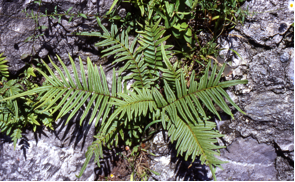
Pinnate-leaved pterid (Pteris Vittata)
Very rare fern: grows only in Campania, Calabria and Sicily, although it is now disappearing in many of these places. La Recent discovery of the species in Menaggio (Loveno-Val Sanagra) confirms Pignatti's floristic monograph, which in 1982 cited. "anciently reported on Lake Como." Extensive historical research shows that botanist Augusto Béguinot published an article in 1926 entitled: "Floristic and phytogeographical notes on the claimed existence of Pteris longifolia near Lake Como." Of course, it is very strange that a species that grows in the south of Campania, reappears in the north after a distance of 800 km.
Sticking to these data, it is reasonable to believe that this plant was introduced to some garden, from which it later "escaped." However, it should be considered that cultivation and propagation in Insubria of the Long-leaved Pterid is not very easy. The station where it grows in Menaggio consists of more than 50 clearly spontaneous individuals and is not present in any of the neighboring gardens. Another interesting fact is the spontaneous presence of the related Pteris cretica, which is widespread in the gorge adjacent to the Mantero plant (Burgatto) or around the locality Forno. The genus Pteris in Italy includes only these two species.
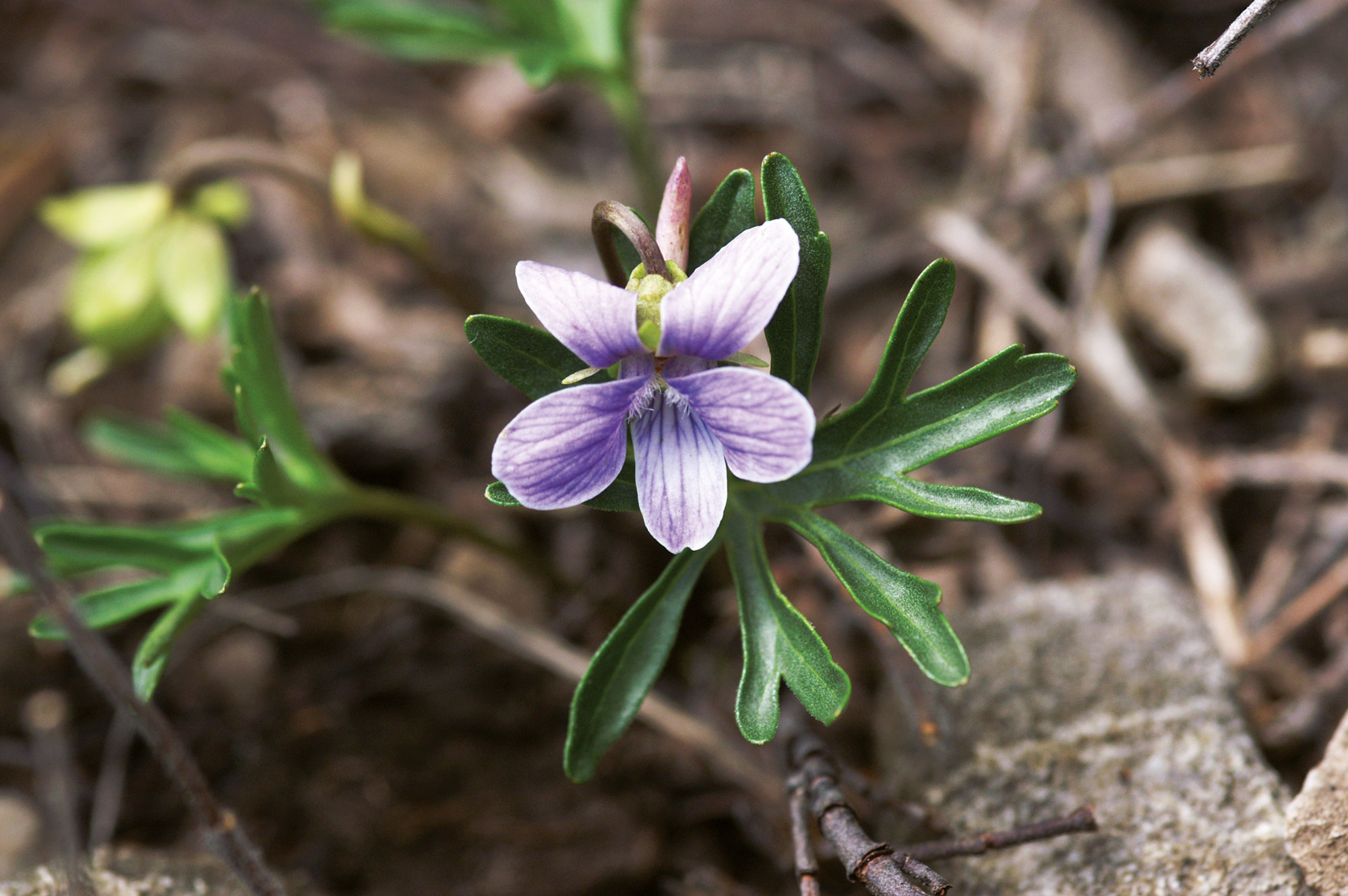
The Pinnate Violet (Viola Pinnata L.)
È one of the rarest species in the western Lario and is very rare throughout Italy. The lilac-like flower has a purplish spur twice as long as the calyx appendages. The feature that gives the plant the specific term "pinnata" is the palmate partita leaf instead of entire.
Distribution: Monte Grona, on the west rim of the Grona at 1000 m, with Cytisus emeriforus and Pulsatilla montana (Dübi, 1954 - Pisani, 1985 - Selva, 2000); a new station found by the writer (Selva, 2001) is near the opposite bank (to Monte Grona) of the Val Sanagra, Monte Pidaggia (m 1528), in the vicinity of the summit, also on rock outcrops.
To understand the sporadic nature of this species, consider that the closest Canton Ticino station to Mt.
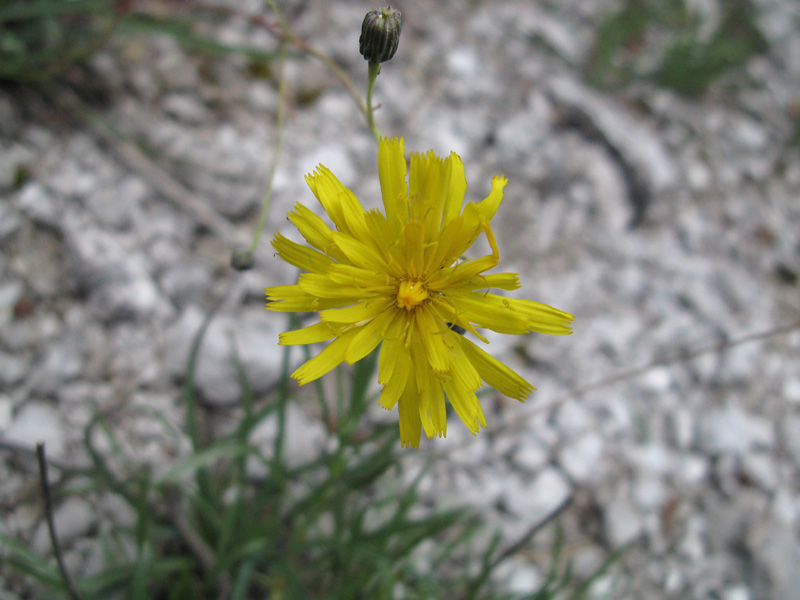
The Thin-leafed Sparrowhawk (Hieracium Porrifolium L.)
Similar to any Sparrowhawk, it is distinguished by its very thin, entire, linear, keeled leaves (2-4 by 9-16 mm) with scattered pale hairs. It lives on sunny calcareous cliffs and dry stony slopes (300-2400 m). The distribution is between the Julian Alps and the Grigne Mountains. In fact, the range does not stop at the Grigne alone, as shown by findings in western Lario: Monti di Griante and Val Menaggio (Comolli, 1834); Panotti di tramezzo.
A new population is reported in Val Sanagra, near Villa Bagatti Valsecchi (Selva, 2002) and one mentioned 20 years ago: Mt. Grona (Pisani, 1985).
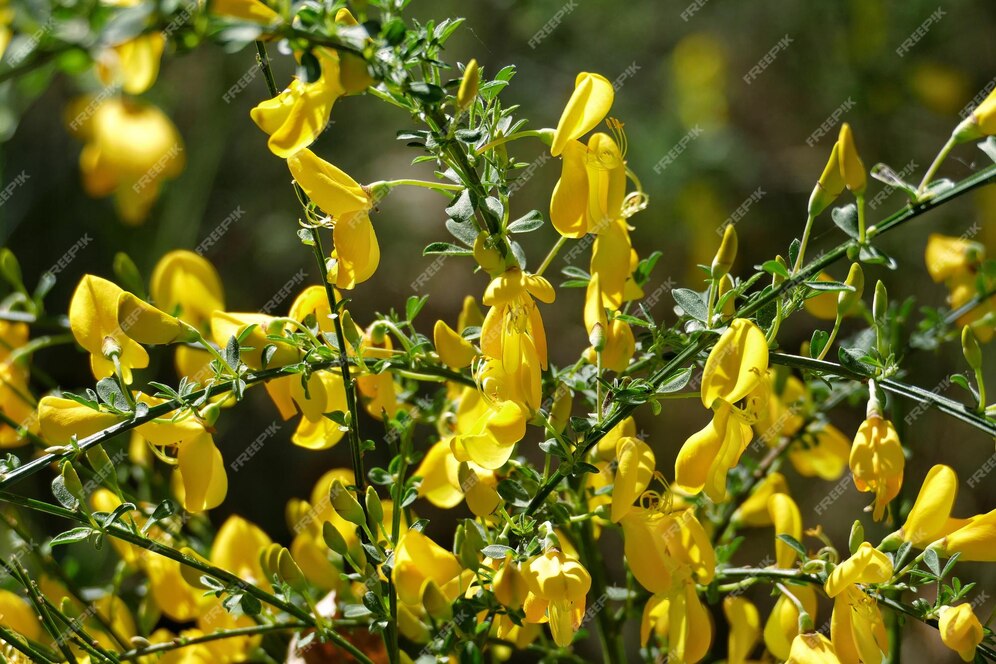
Broom or Citiso insubricum (Cytisus Emeriflorus Rchb.)
Citiso insubrico is an endemic species distributed between Friuli, Lake Garda and Lake Como. It is a small shrub very similar to a broom.
The genus Cytisus, in fact, includes most of the species vulgarly called "brooms." For example, Coalmen's Broom, which covers vast expanses of abandoned grasslands in our mountains, is identified by the Latin term Cytisus scoparius.
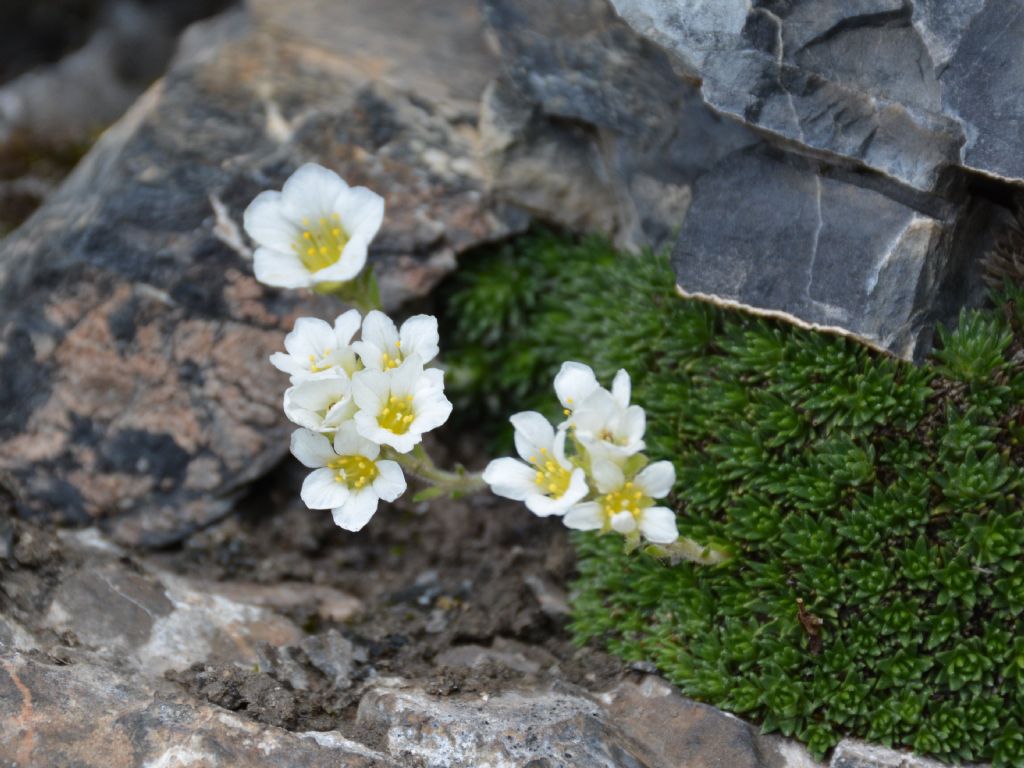
Vandelli's Sassifraga (Saxifraga Vandelli VEST)
It is undoubtedly the most important finding of all my excursions, having never been reported by any botanist on the western shore of Lake Como.
La Saxifraga Vandelli is an insubric endemism that grows on limestone cliffs in the Orobian Alps, between the Giudicarie, Grigne and Bormiense. In Lake Como it has been reported in the massifs Corni di Canzo, Resegone, Artavaggio and Grigne.
The western Lario station is in the Monti di Croce (Selva, 2000): from Paullo take the mule track that climbs to the locality Forcolette (825 m), where a path departs to cross the small promontory of Sasso Martino (862 m). You reach the vicinity of some trenches and here you descend into the steep lean meadows, (great care must be taken!) where you reach above the Church of S. Martino and the beginning of the Stera Valley (between Pastura and C. Bianca). In the grassy crags outcrops dolomite cliffs of a few tens of square meters, of which the left flank should be observed. The population present is small, being composed of a few dozen heads.
The Queen Grass (Telekia Speciosissima L. Less.)
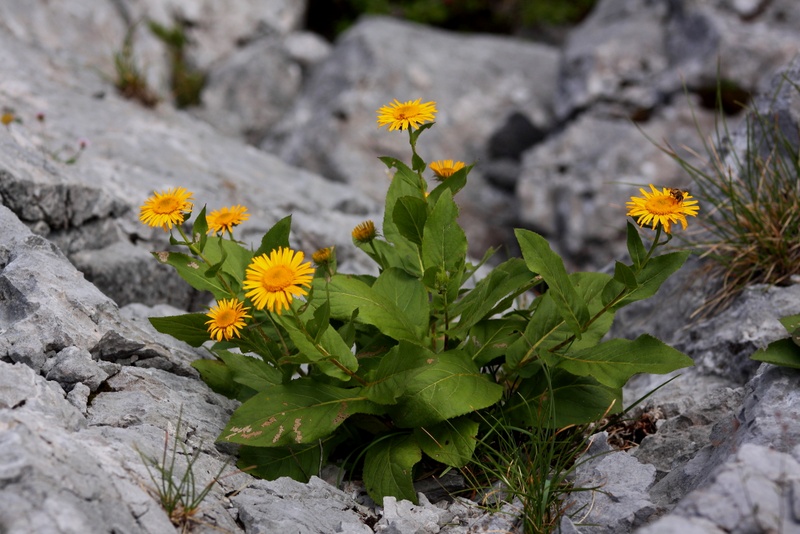
An herbaceous plant up to 50 cm tall, the broadly obovate or pyriform leaves have an amplexicaule base and reach a length of 15 cm. Generally, they appear glossy, finely toothed and leathery in texture. The flower is a golden yellow flower head (similar to a small sunflower), solitary, very large (4-6 cm). Queenwort is an insubric endemism that grows on dry or stony dolomite cliffs.
Distribution: slopes of Monte Pidaggia (m 1528) between Carlazzo and Cusino (Dübi, 1953/60 and Becherer, 1962), Val Sanagra between Monti di Gottro and Alpe di Logone (Selva 1999-2000), Sasso di Cusino at 1000 m (Selva, 2000); Monti di Griante - Church of S. Martino (m 475) - Stera Valley with Physoplexis comosa (Selva, 2000), Buco della Rotella - Forcolette - Paullo (Comolli, 1834 ; Dübi, 1953 and Selva, 2000); Monte Grona ? (Consonni & Arrigoni, 1997), to be verified; Monte di Tremezzo.
Erica arborea (Erica Arborea)
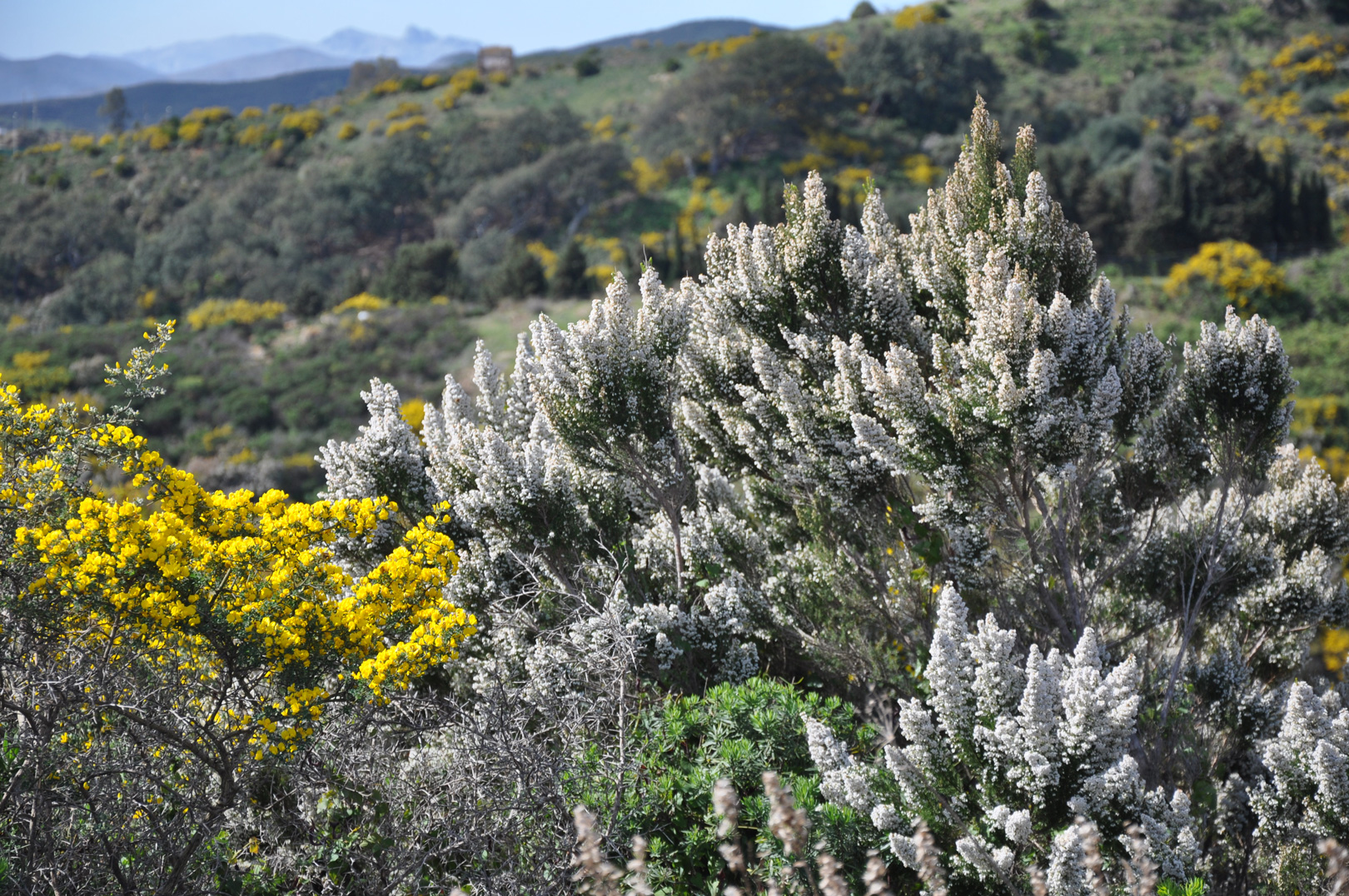
L'Erica arborea (Erica arborea) also called broom, ulice or broom. It derives from the ancient Erica lineage that has its center of origin in South Africa where it is represented by no less than 530 species. Its presence in southern Italy attests to ancient contact between Africa and Europe. Very similar to Erica carnea, it is distinguished by its arboreal habit (over 2 m tall), reddish bark and woolly-white extreme branches. The white, bell-shaped flowers are inserted in the terminal part of the branches, topped by a sprig of only leaves.
The habitat of Erica arborea is evergreen Mediterranean scrub or young ilex groves. The Italian distribution is concentrated in the Mediterranean basin although it penetrates north of the Apennines reaching Romagna, southern Piedmont, Lake Garda and Lake Como, where it ascends as far as Colico and Chiavenna.
The presence of Erica arborea in western Lario had already been reported by distinguished authors: Christ indicates it for Tremezzina, according to Bär, it abounds between Grandola and Loveno. At present, Erica arborea grows between Grandola and Menaggio (Loveno and Gaeta). Particularly in Val Sanagra, the last individuals of Erica arborea are found at an altitude of 550 m, in the immediate vicinity of Sass Corbee (on moraine deposit, among chestnut trees). Those in Val Sanagra is one of the most distant stations from the lake basins.
Following recent surveys, the writer reports populations of Erica arborea at the Colonno Mountains and the Laglio Mountains.
Curious the uses of arboreal heather: farmers used it to infrascise Silkworms about to produce the cocoon (Bigattiere). Others removed the basal parts of the stem to obtain hard, low-fuel wood suitable for pipe making.
Clear downy mildew (Rhynchospora Alba L. Vahl)
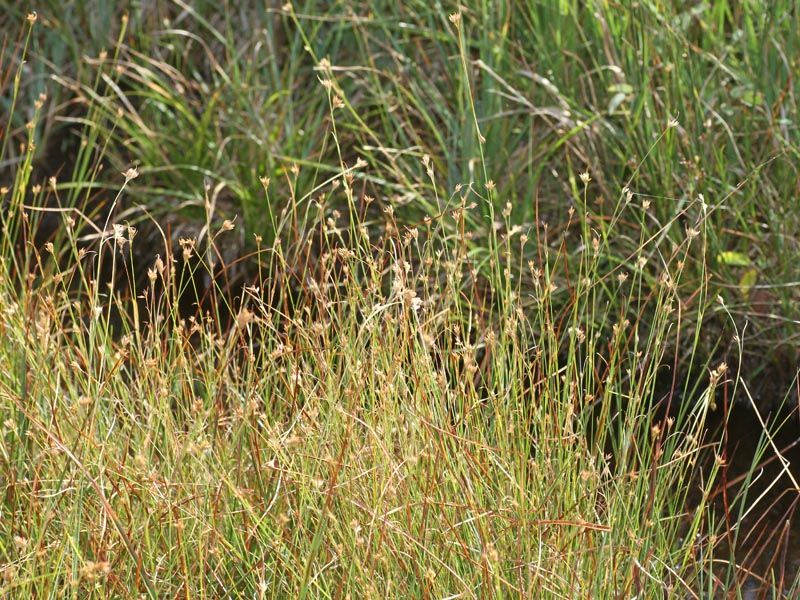
A very rare species throughout Italy: it grows in moist environments, particularly low peat bogs located at altitudes between 0 and 1,500 m. It has a daffodil-like appearance surrounded by narrow, grayish, coiled leaves; it produces small, whitish terminal floriferous bundles.
This plant is disappearing in almost all of Italy, probably this can be related to the disappearance of marsh habitats, destroyed by land reclamation, urbanization or natural silting.
The species thrives in a very small population at Montuglio, where the bar is located that closes the trail up to Alpe Rescascia (Selva, 2003).
Clematis alpina (Clematis Alpina L. Miller)
Fairly common species throughout the Alps, from the A. Julian to the Maritime A. It grows in montane and subalpine forests with white spruce (Abies alba) or beech (Fagus sylvatica), or in mugelets. In other cases it is found at rocky outcrops, preferably of limestone rocks.
Locally, it is a rare species; in fact, there are no reports for the territories included in the Lepontine Alps and Lario-Intelvese mountain communities. The species grows on dolomite scree on the slopes of Mount Grona, on the path from the Menaggio Refuge up to Forcoletta (Selva, 2005).