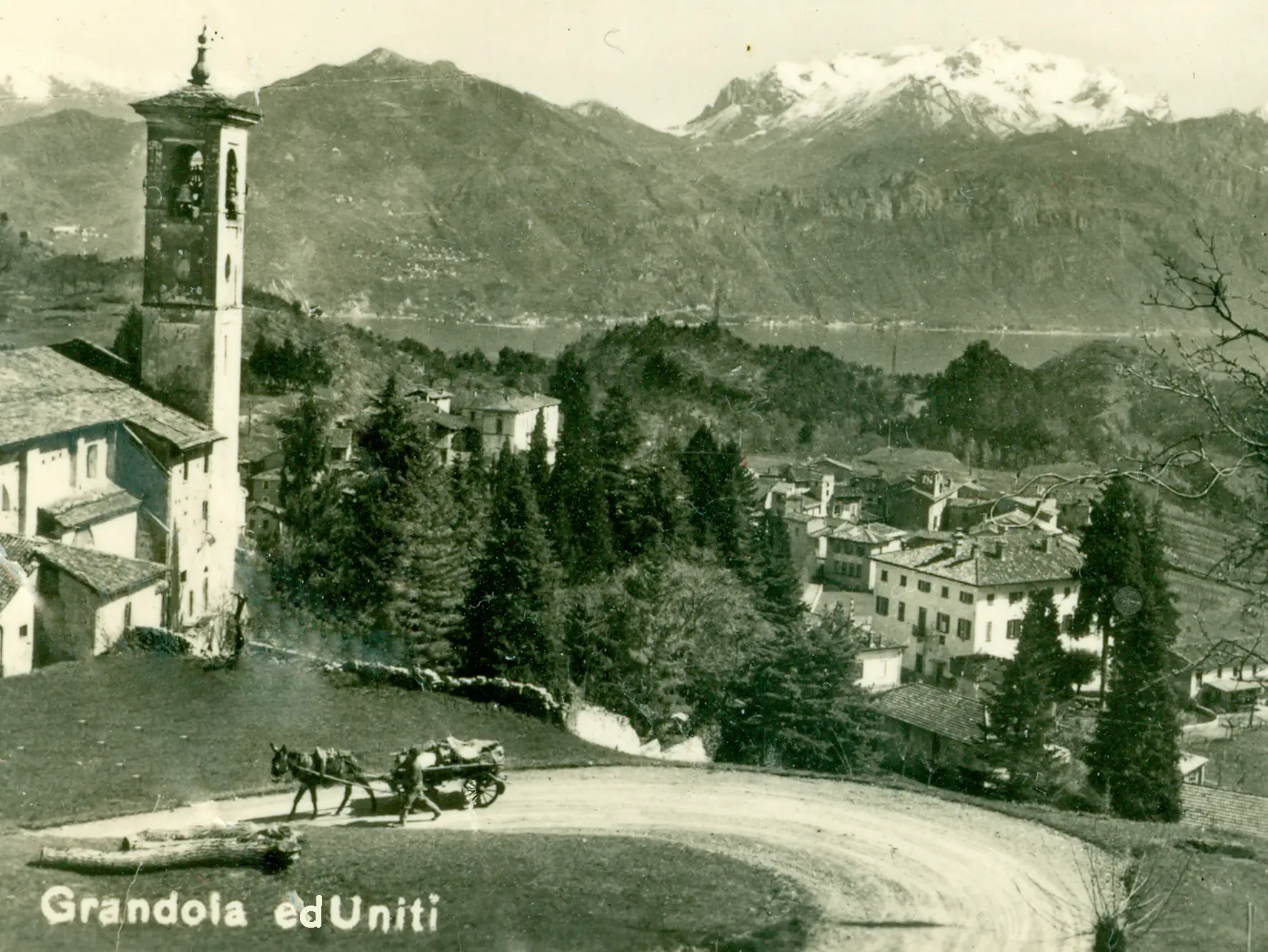
It takes place on January 31, and it is one of the oldest and most cherished festivals in the Grandola ed Uniti community; the name comes from the expression "January has passed." It is a large bonfire around which people gather to celebrate the end of winter and to welcome the coming spring.
At one time each hamlet organized its own Gineè, and all members of the communities were engaged in collecting brushwood and brambles, especially the young people. "Vem a fa spin." let's go make brambles, they used to say: the tradition was also meant to clean up the fields, roads and forests. On the day of Gineè, the boys would go through the villages with the sampùgn ( cowbells) singing and running to warn the people of the upcoming festival.
Today that custom has been lost and the burning has become one for all hamlets in the municipality. Large is the amount of wood stacked, and on top of the pile is placed a puppet Of cloth and paper depicting a man. These are symbolic of winter finally defeated, burned by the purifying flames that allow the arrival of spring rebirth. Similar traditions are often found in other traditions in neighboring countries. That of Gineè has ancient origins: it has persisted for dozens of years, perhaps even since centuries.