The Sanagra Valley, with its majestic mountain nature, witnessed an ancient tradition that characterized the lives of its inhabitants for centuries: the production of artificial coal. These places, particularly in the steeper and more wooded areas of the middle valley, housed clearings where coal was produced, once highly valued and used in neighboring areas, especially in metalworking centers.
A Historical Profession
The profession of charcoal burner, witnessed throughout the Larian territory since the Middle Ages, took place during the cold winter months, when agricultural activity stopped. It was precisely at that time that the men of the Sanagra Valley engaged in this ancient practice, taking advantage of the ideal season for cutting the wood, when the vegetation was in hibernation. Coal made from wood, in fact, turned out to be particularly suitable for metallurgy, thanks to its higher heat output than wood and its lightness, which made it perfect for furnaces and hammers, fundamental tools in the metalworking process.
The Coal Production Process
Coal production was a job that required experience, patience and constant vigilance. The process, which took about five days, began with the selection and cutting of wood, which had to follow precise lunar phases. Charcoal burners used to cut wood during the waning moon, as this period was believed to be the most favorable to ensure strong and durable wood. The use of wood from trees such as hornbeam, cherry, ash, elm, beech, and birch was common.
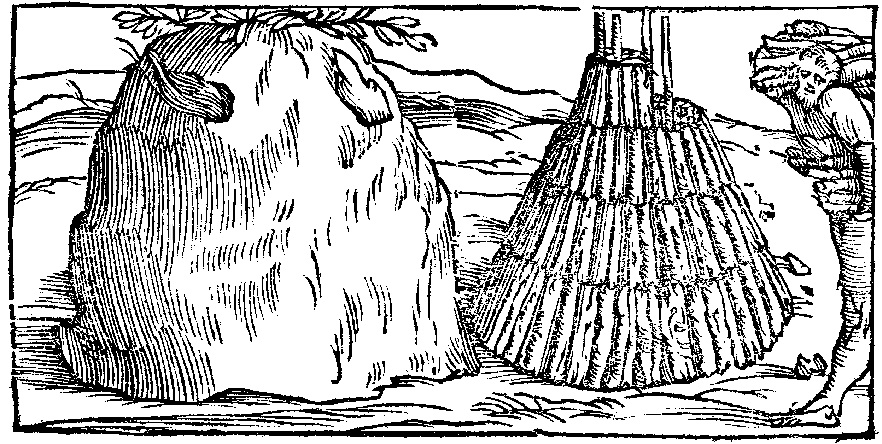
Once the wood was cut, an "iala," a square about five meters in diameter, was created in the center of which the branches were arranged. These were carefully stacked around a central pole, forming a cone with an opening at the base. The structure was then covered with green brushwood, soil, moss and leaves, creating a shelter resembling a hemispherical hut, called a puiatt.
The Combination of Experience and Slowness
Around the puiatt, a "rostra," a retaining fence about 50-60 cm high, was built, consisting of sticks driven into the ground and intertwined broom branches. The burning process began with the insertion of burning branches through the central hole left by the pole. As the fire burned, the smoke would change color from the initial black to white, until it became almost transparent, a sign that the charcoal was ready. Burning lasted three to four days, during which time the charcoal burner had to constantly monitor the temperature and state of combustion.
The Harvest and Transportation
Once the combustion process had concluded, the puiatt was irrigated with large amounts of water to stop the internal fire. The resulting coal then had to dry before being collected and transported. Usually, it was placed in large jute sacks and carried to the village on the back of a mule or on the shoulder, ready to be used, especially in ironworking.
Testimonies and Memories of a Tradition
The testimonies of charcoal burners are numerous and recount with pride and passion the life of a craft that has deeply marked the history of the Sanagra Valley. Not only a job, but also a way of life, linked to the mountain, its traditions and respect for nature.
Today, the Sanagra Valley Museum preserves the memory of this tradition, allowing visitors to immerse themselves in the past and discover how coal production was a fundamental element of mountain life, on which not only metallurgy but also many other activities in the area depended.