The Production of Lime
Lime was produced within the casts, ancient furnaces built of stone, through a complex and multifaceted process.
Today, these furnaces represent a valuable heritage of industrial archaeology, witnesses to technical and craft knowledge linked to a sustainable local economy deeply intertwined with the landscape. L'Sanagra Valley Ecomuseum commits to protect, enhance and tell this heritage, so that the memory of these activities and related crafts is not lost. The calchere are not only material relics: they are Silent witnesses of a world that is no more, but which has left a deep mark on the history and identity of the valley.
What is a calchera
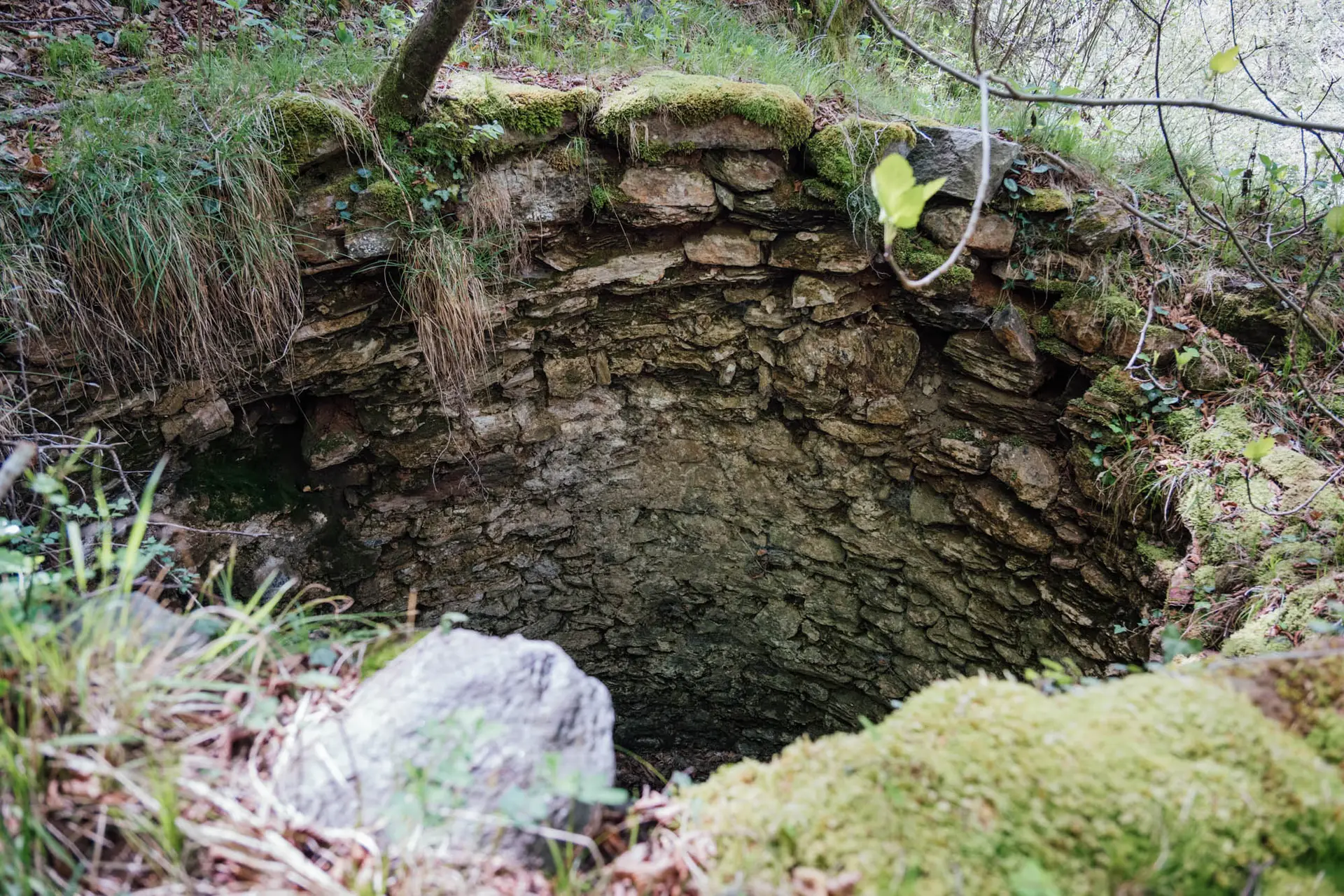
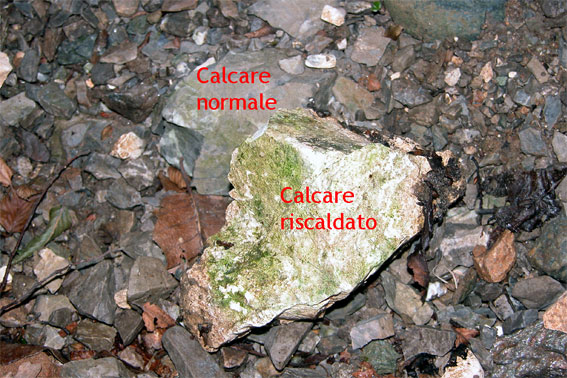
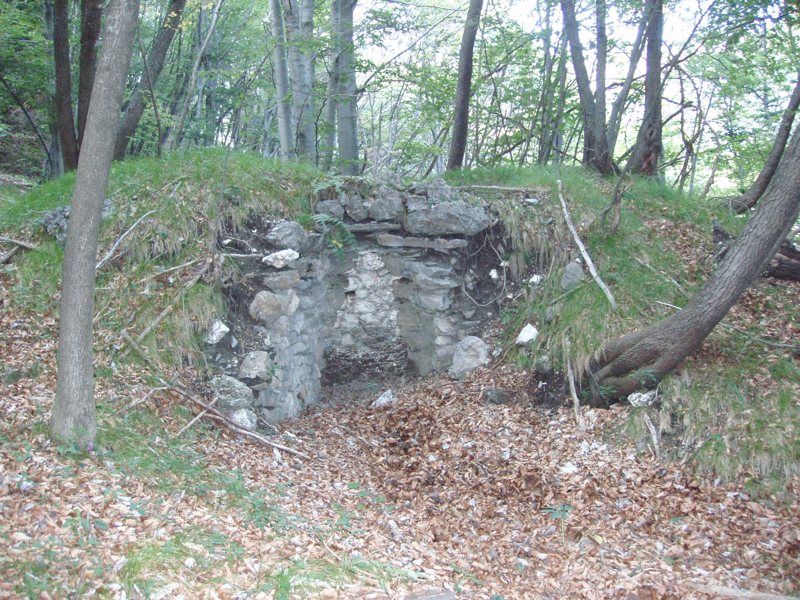
Le casts are ancient furnaces used for the production of the lime, obtained by high-temperature firing of limestone. Their presence is documented mainly along the pre-alpine chain, where limestone and dolomite, materials essential for this activity, outcrop. In Sanagra Valley some have been found as many as fourteen, a significant number that testifies to the historical importance of this area in the lime industry.
The need to use limestone explains the placement of the calchera of the Sanagra Valley, concentrated in the area south of the Grona Line, the large fracture dividing the dolomites (to the south) from the crystalline rocks (schists, to the north).
A north of the fault (beyond the Forcoletta - Alpe Logone alignment) the limestone rocks are replaced by shales, which have a different chemical composition from limestone and therefore cannot be used for lime production.
On the other hand, shales, which are more resistant to heat, were very useful for building the load-bearing walls of the gully.
While the rocks needed to make the load-bearing masonry of the kiln came from the northern sector of the above alignment or from the Sanagra stream bed (which carried stones from the high heads of the catchment area downstream), the raw material was mined in the south.
In general Calcherae are located near a stream or near valleys or tributaries; the neighboring presence of Wooded plots of beech, hornbeam or fir treese, used to obtain charcoal useful for the operation of the calchera.
The lower reaches of the Sanagra stream thus had all the prerequisites necessary to ensure the operation of the calchere: the forests, limestone, and gentle slopes useful for obtaining the flat spaces needed to produce charcoal.
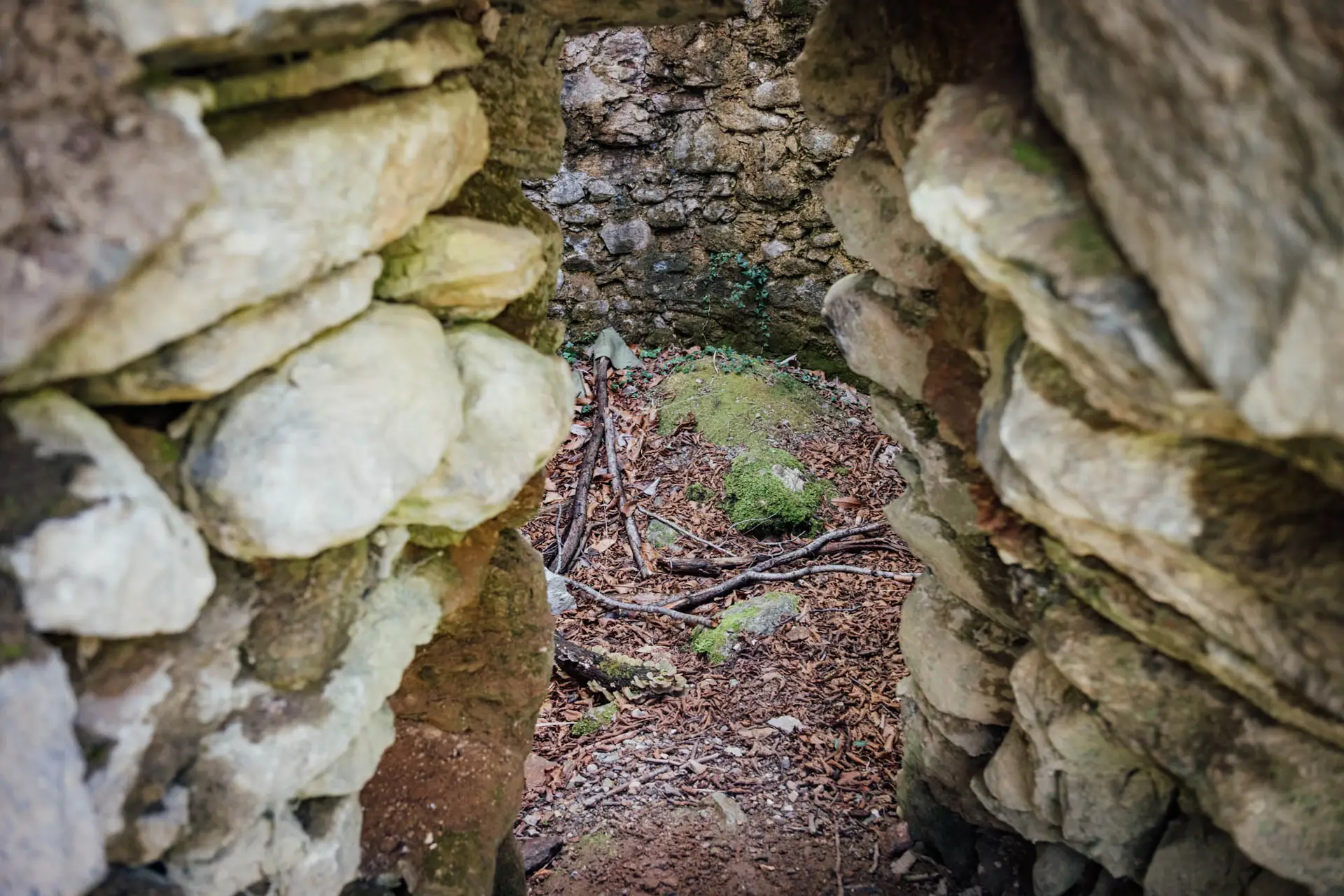
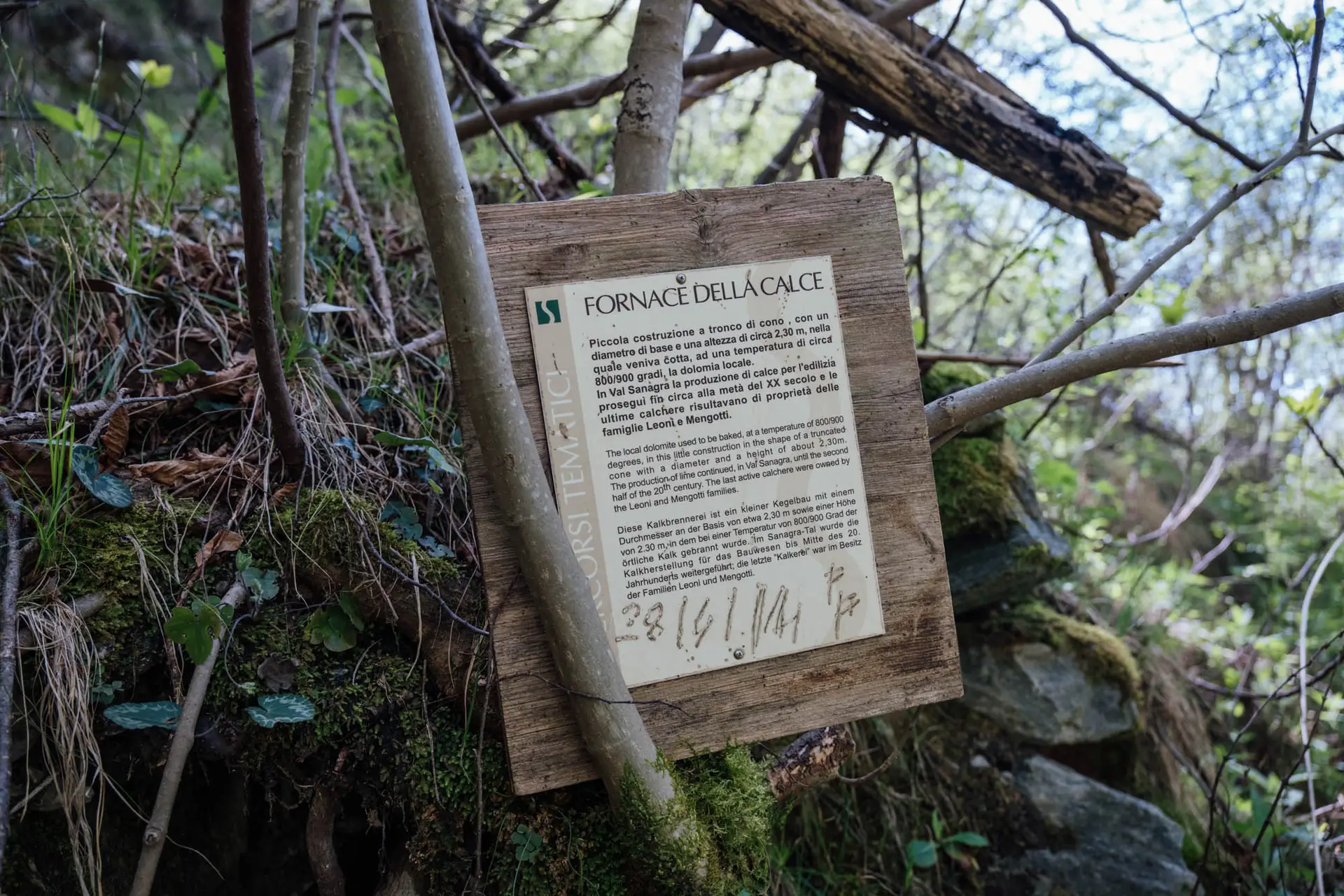
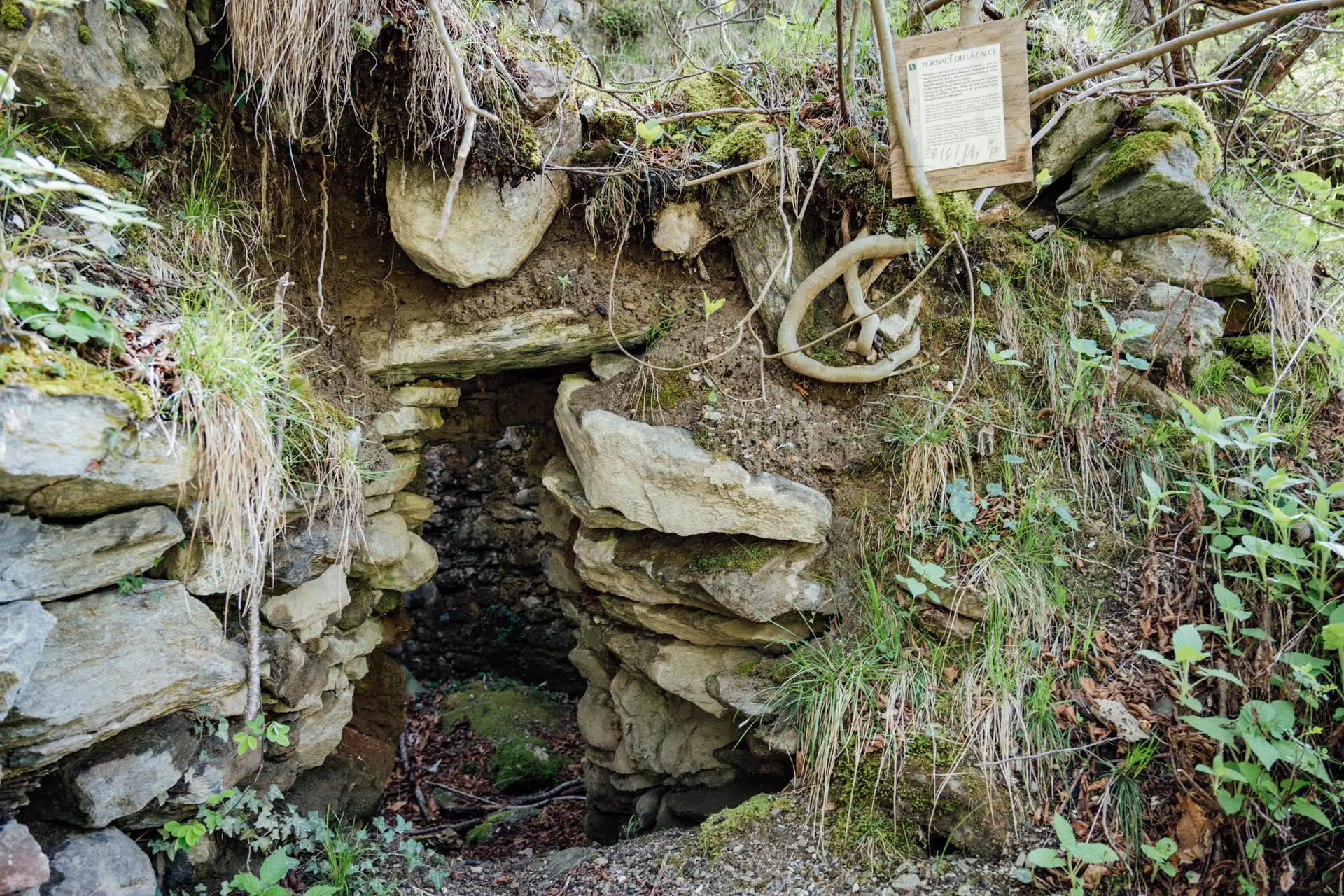
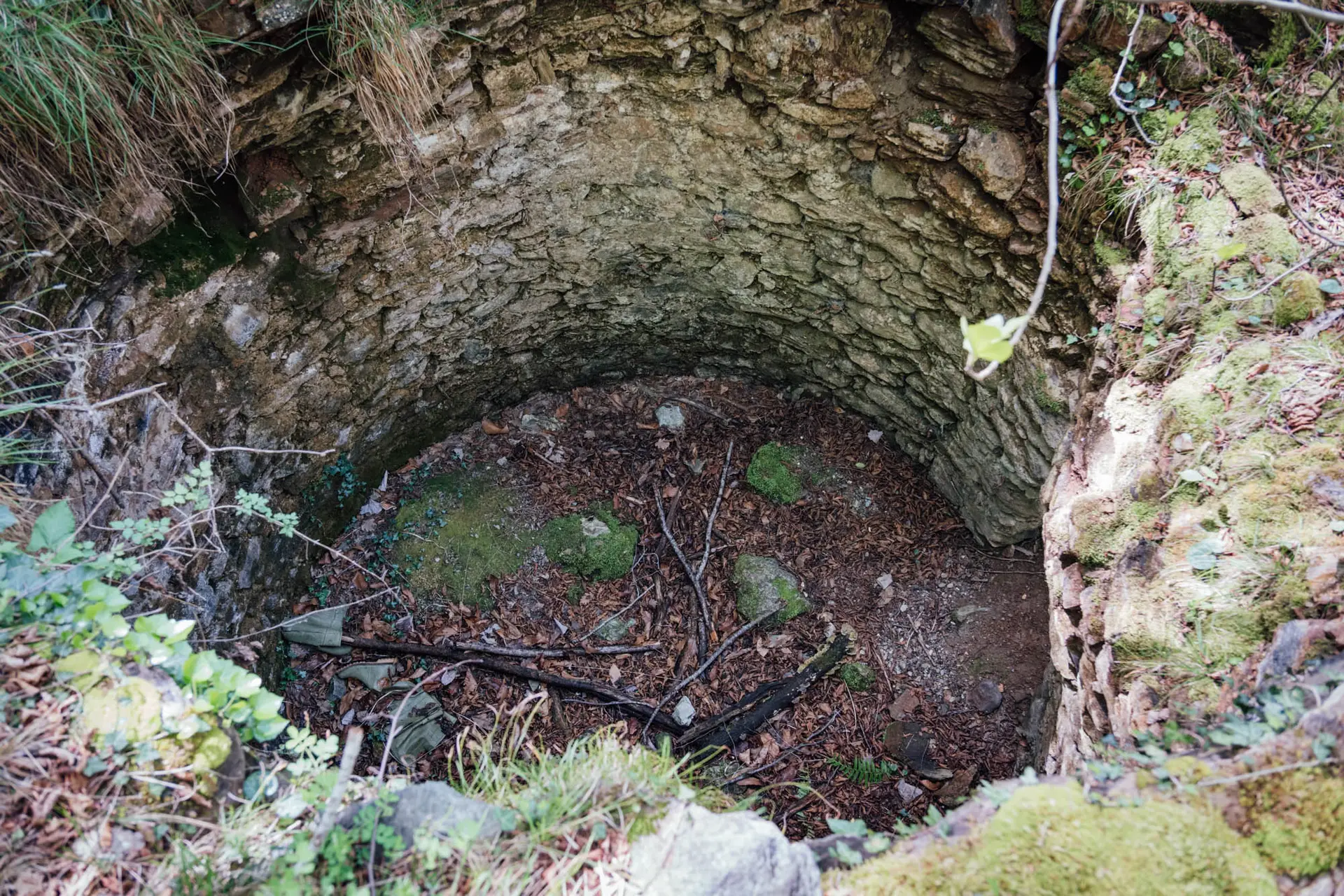
Casts usually have a "barrel" shape. with dimensions varying between 3-5 m in diameter and 2-4 m in height. Two openings were required to ensure operation: one at the top, while the other, which can be likened to a small entrance door (1 m x 2 m), was used to introduce the limestone and extract it at the end of firing.
A not insignificant factor was theventilation: for this, the small access door played an essential role, which allowed oxygen to pass to the fire while maintaining autonomous combustion.
How a calchera works
A pit was dug inside the building, whose function was to collect coal and prepare the combustion chamber.
Above was built a support base for the limestone to be cooked, generally favored stones of modest size, which further facilitated the processing steps; stones were arranged regularly, from the largest to the smallest.
Once the combustion, the small doorway was closed while the pile of stones was covered with rocks (other than limestone) or clods of earth.
The preferred wood for combustion is the same wood used by charcoal burners (in the well-known pitches), in fact the charcoal was produced using the same technique: stacks of wood covered with earth; the preferred plants were beech, fir or hornbeam.
The calchera was to be guarded for three or four days, there were usually two and three people whose function was to control the fire and keep it at the proper temperature (800-1000 °C) to obtain lime. The most important person in charge of supervision, however, was the master kilnmaster, a person with great experience to do this job.
The proper functioning of the calchera was attested by the red flames coming out of the upper mouth, if the firing was close to completion such flames would take on bluish hues.
The time needed to produce the lime was seven or eight days But, often, it was necessary to check the progress of the firing.
The check was carried out by taking a stone from inside the calchera, these were placed in contact with cold water to check its possible reaction. Another method was to use an iron awl, assessing whether or not it could be punctured.
At end of cooking, the discharge of the material took place quite quickly, in fact, lime does not require much time to cool.
La quicklime, name given to the newly produced lime, required an additional preparation step: the reaction with water. This was the most risky stage of processing because the reaction between quicklime and water, which is quite intense, can cause burns.
For these reasons, a pit was dug to accommodate the "quicklime" which was slowly sprayed with water, at the end of the reaction, "dead lime" or the final product ready for use was obtained.
Lime is used in several areas: in mixtures with cement, to make plasters, in flooring, for painting, or even in agriculture.
The Sanagra Valley limestones were owned by the Leoni and Mengotti families and were active until a few decades ago. Generally located near rocky outcrops, debris (point landslides) or streams, these were strategic locations to have raw materials available.