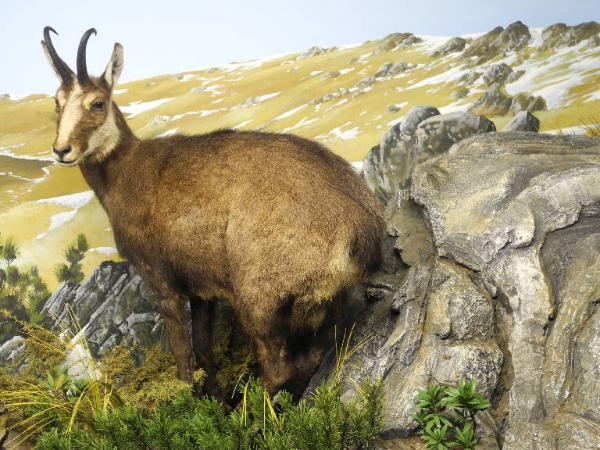
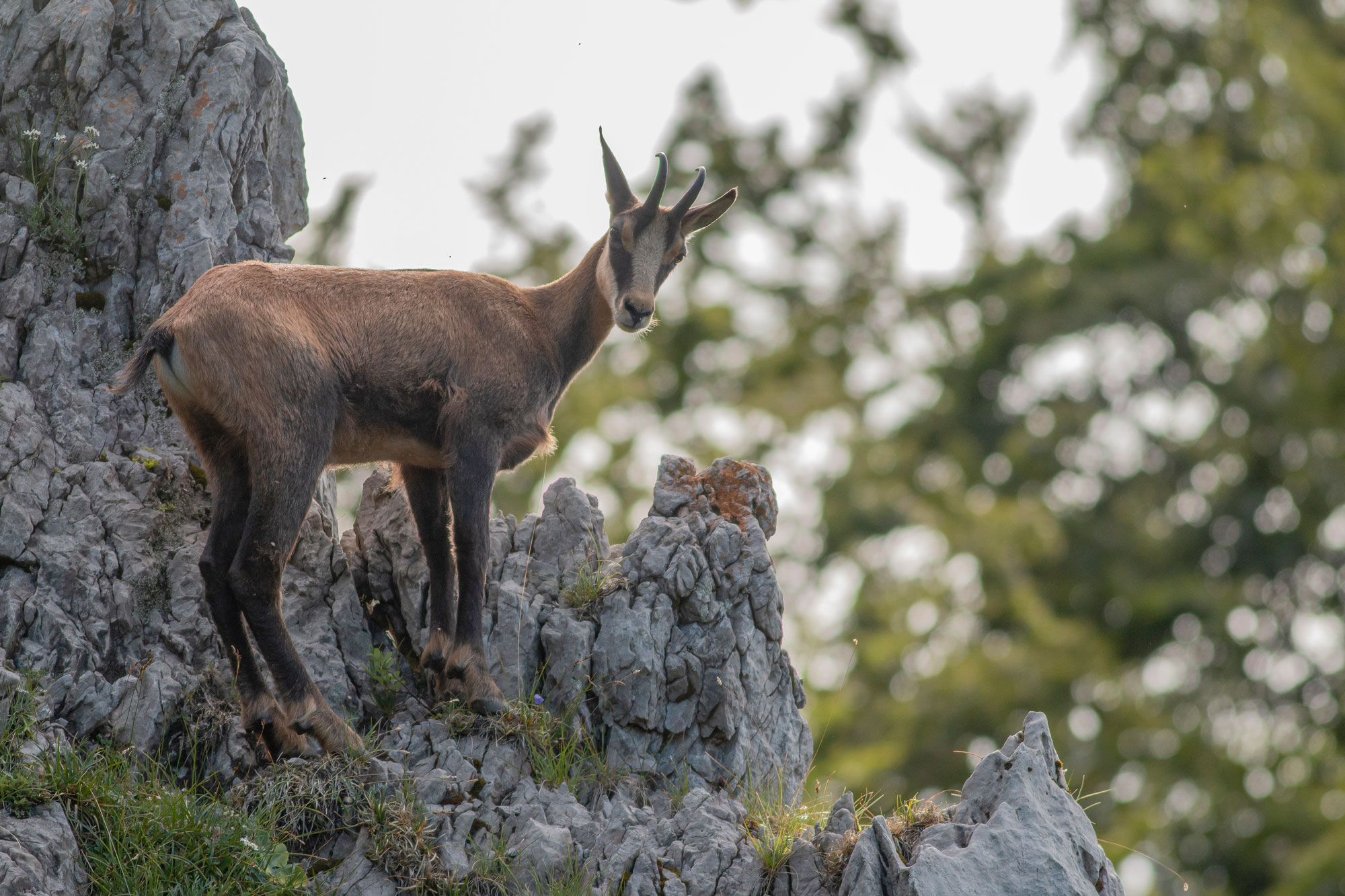
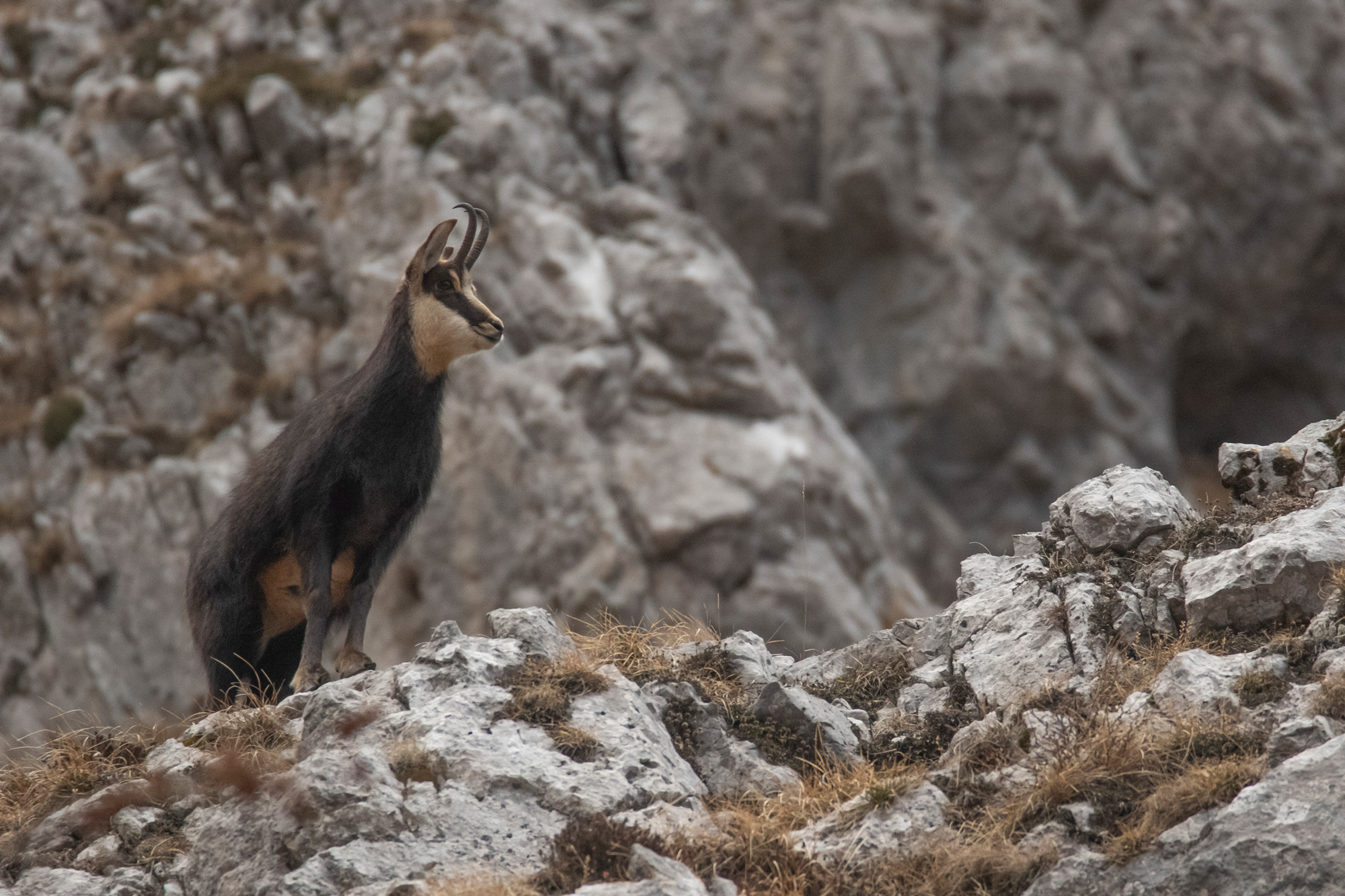
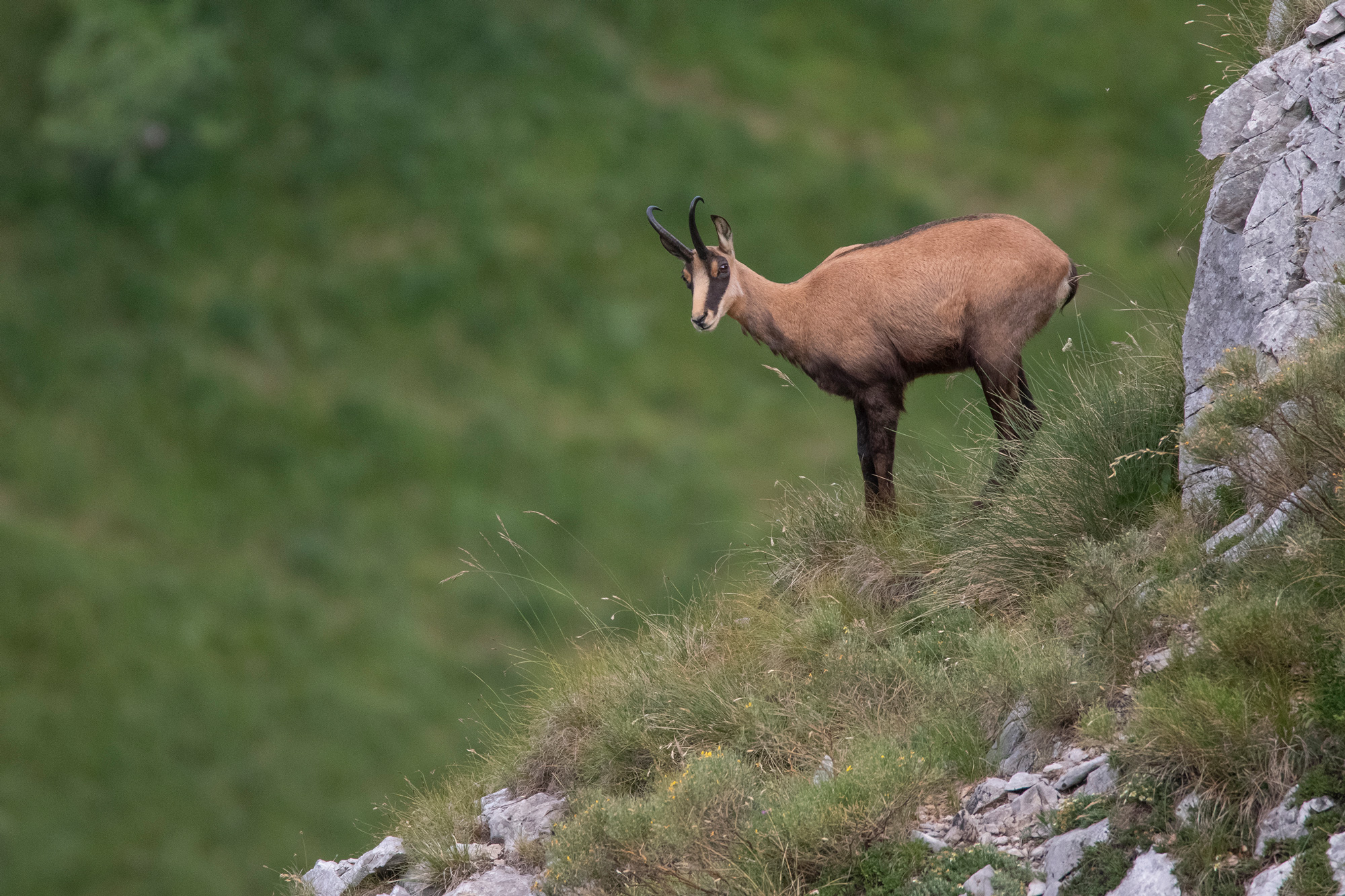
The Chamois is a relatively small ungulate, belonging to the Caprine subfamily, and is the smallest of its relatives. Because of its physical characteristics and agility, it is more similar to antelopes and saigas than to other alpine bovids such as ibex, mouflon and wild goats.
Body length varies between 130 and 150 cm in males and 105 to 125 cm in females, while height at withers is about 85-92 cm in males and 70-78 cm in females. Weight varies with age and sex, reaching 50 kg in adult males and 40-42 kg in adult females. In yearlings (one-year-old chamois), the weight is about 15-20 kg. Body weight fluctuates greatly throughout the year, peaking in October, when the animal accumulates maximum fat. During the breeding season, adult males can lose up to a third of their body weight due to the physical stress of dominance struggles.
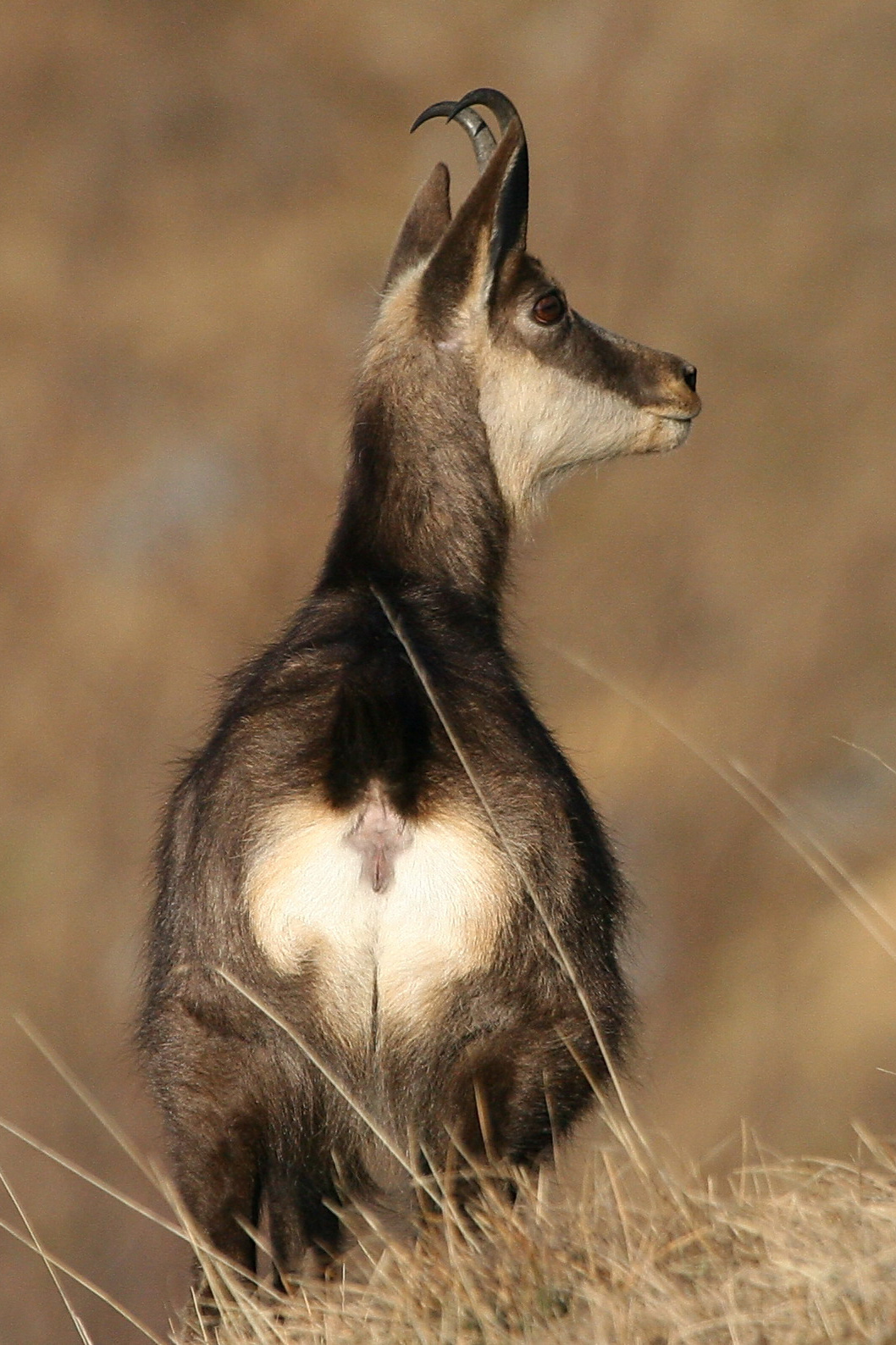
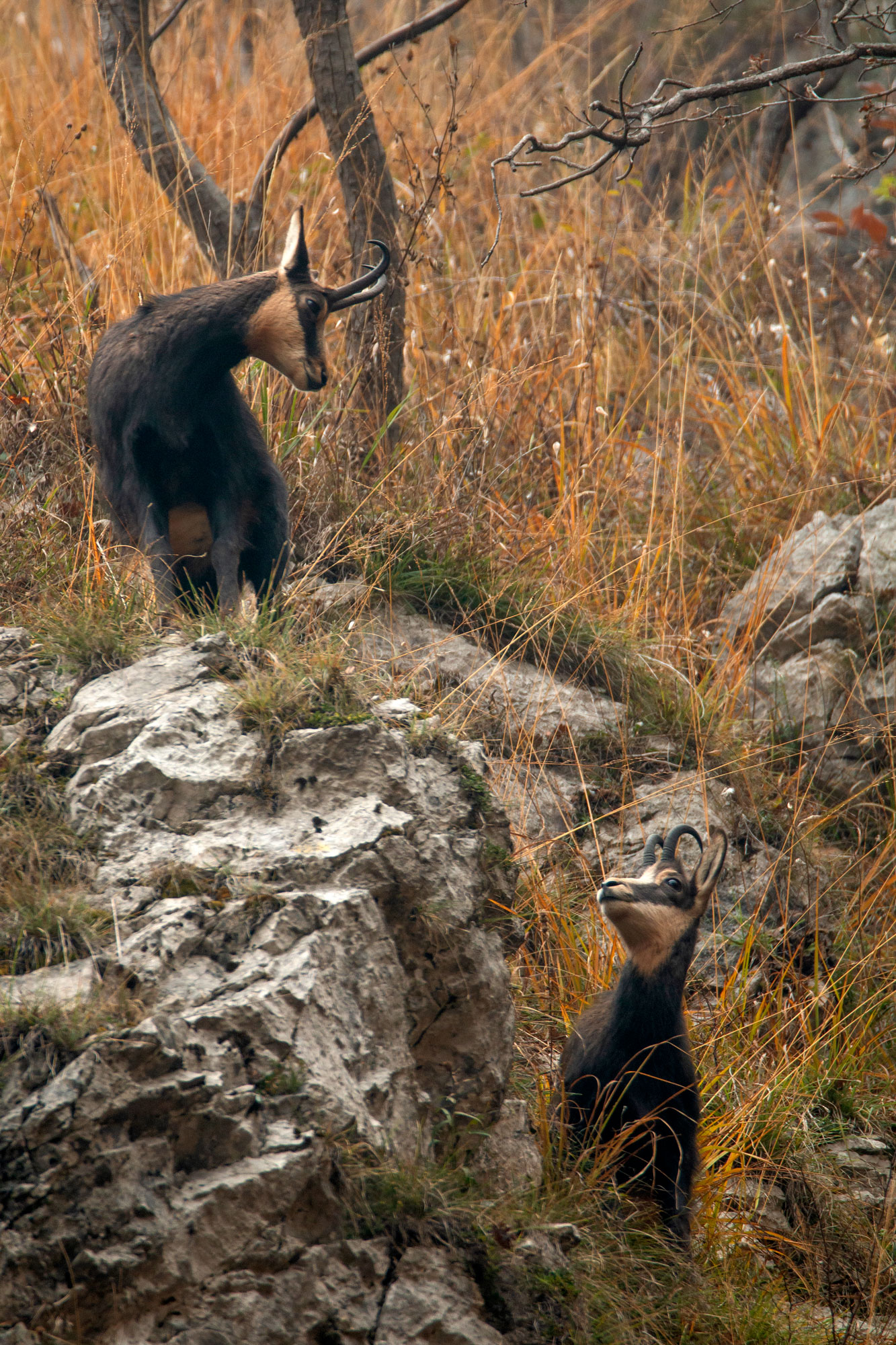
Physically, the male has a stockier shape and a more developed forelimb train, while the female has a more streamlined body, with a more pronounced abdomen and hindlimb train. The neck of the male is short and massive, while in the female it is thinner, so that the muzzle looks more elongated.
The chamois's coat is composed of two types of fur that provide it with optimal protection against the severe temperature fluctuations typical of the mountains where it lives. This allows the chamois to withstand the harsh climatic conditions of the Alps, where it often takes refuge in steep, rocky terrain.