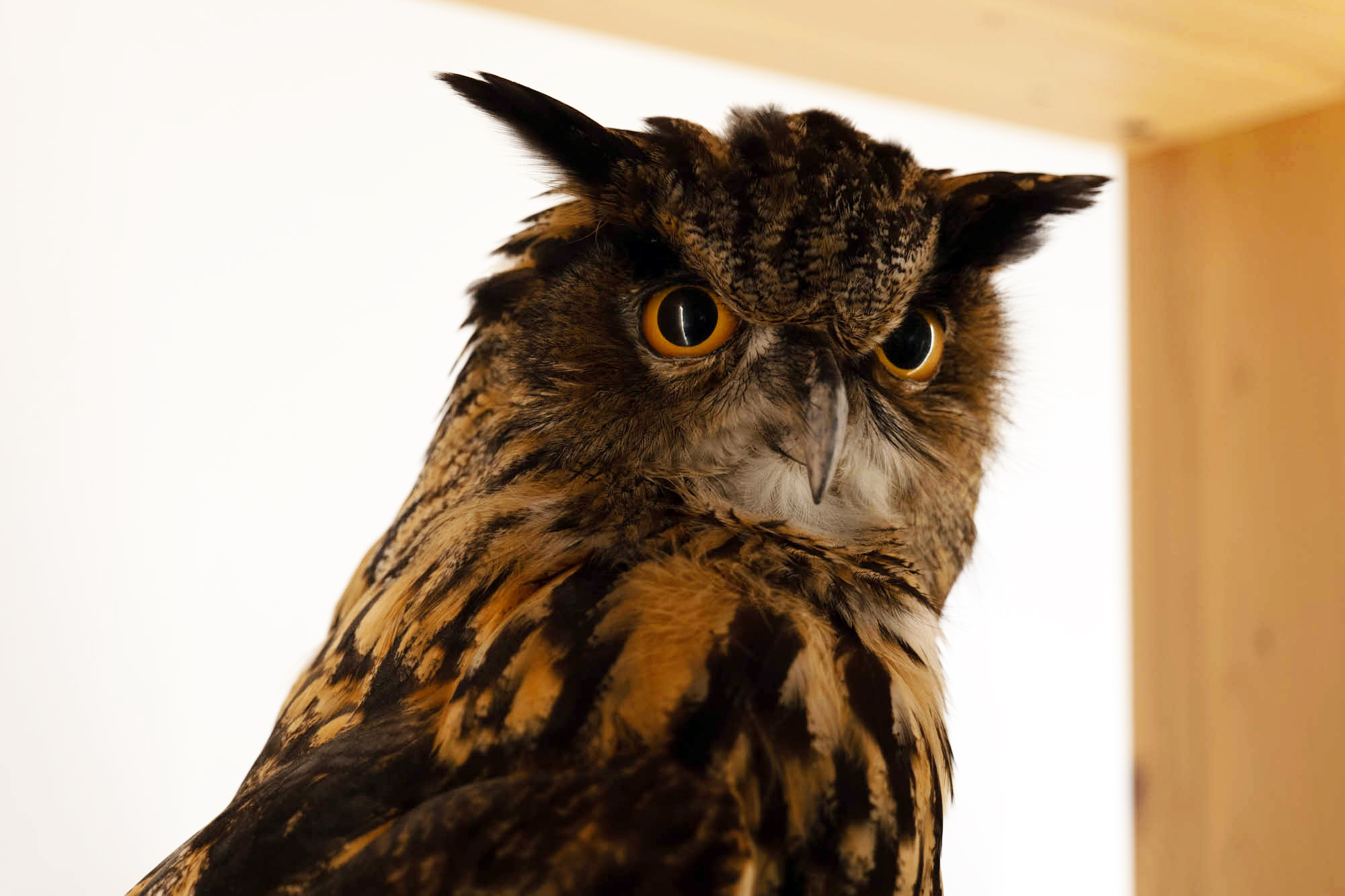
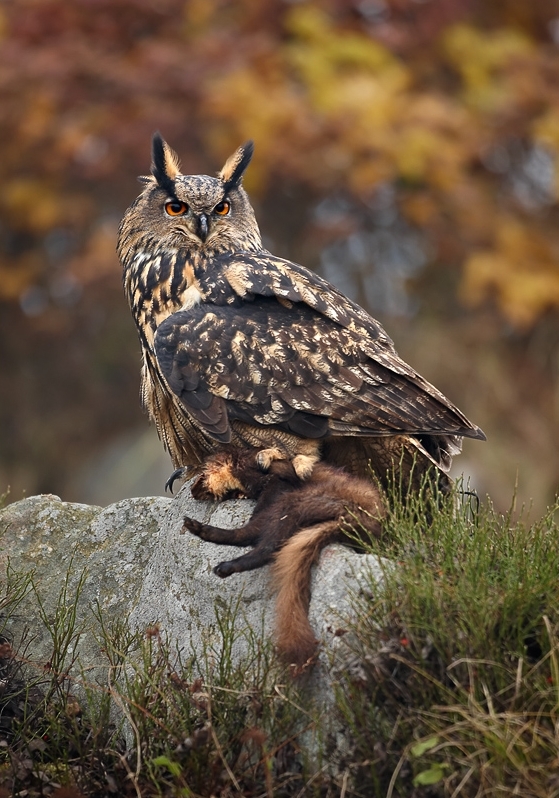
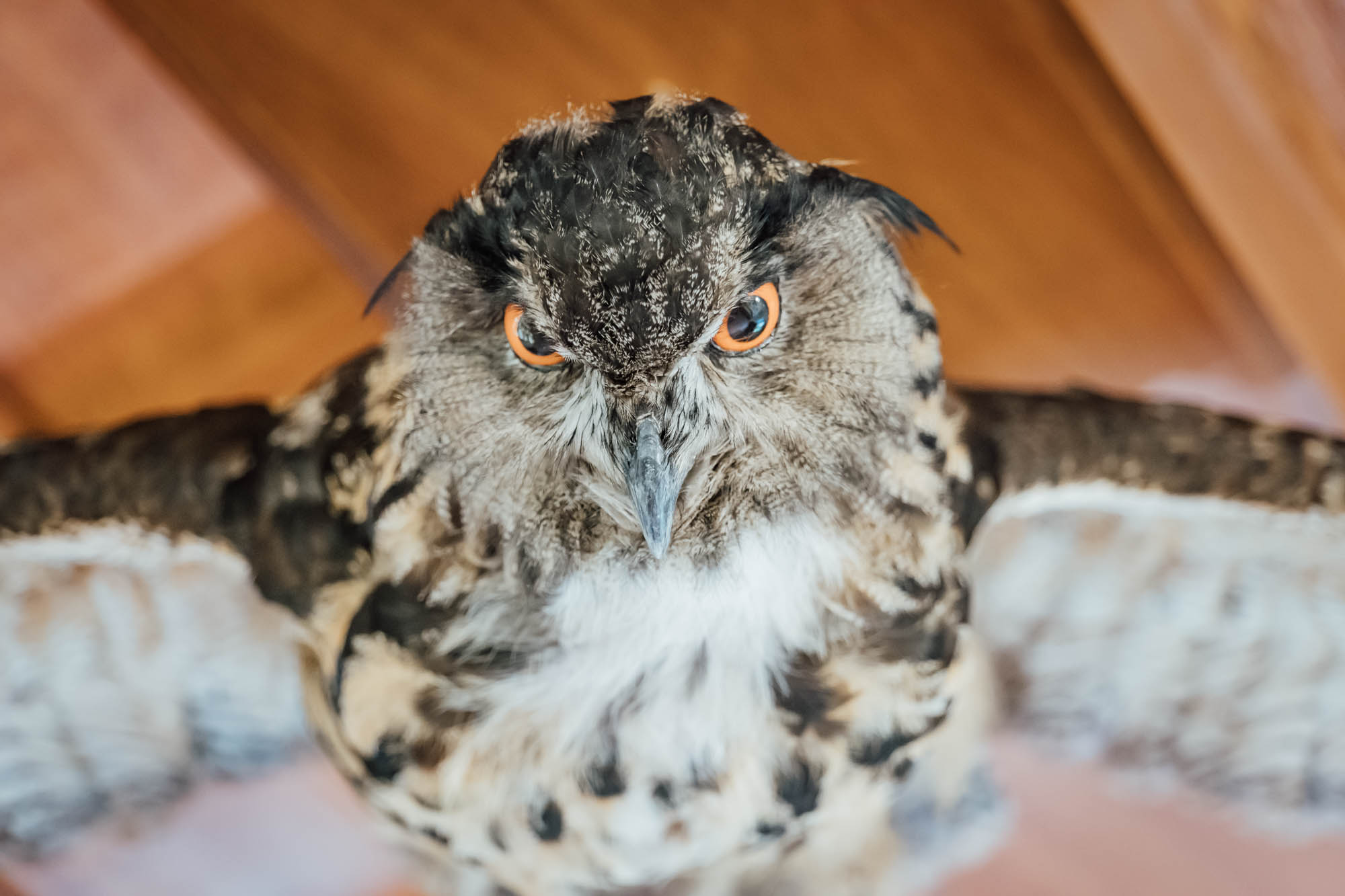
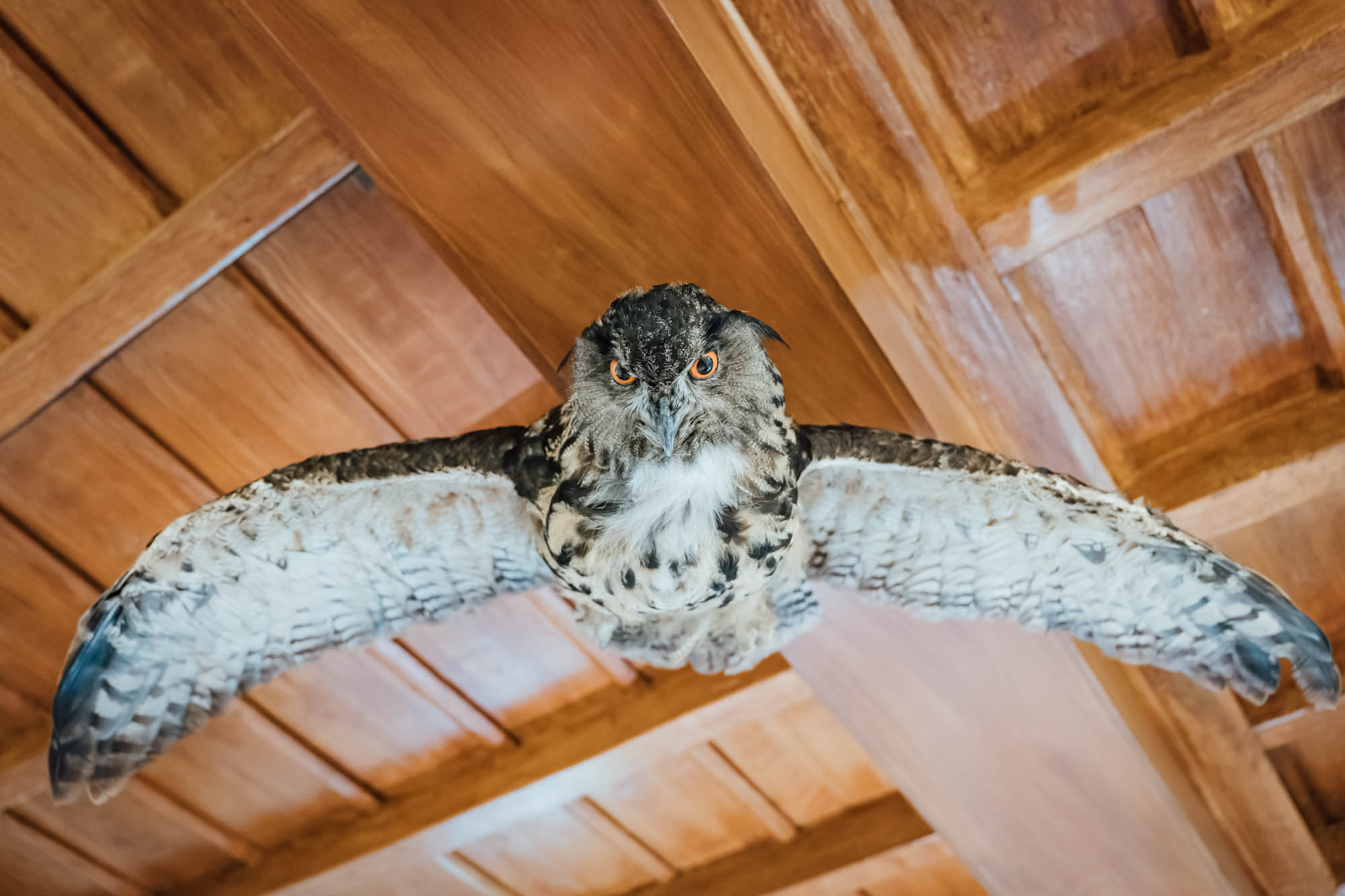
The Royal Owl is the largest of the nocturnal raptors, with a length that can reach 70 cm and an impressive wingspan, exceeding 180 cm in the largest males.
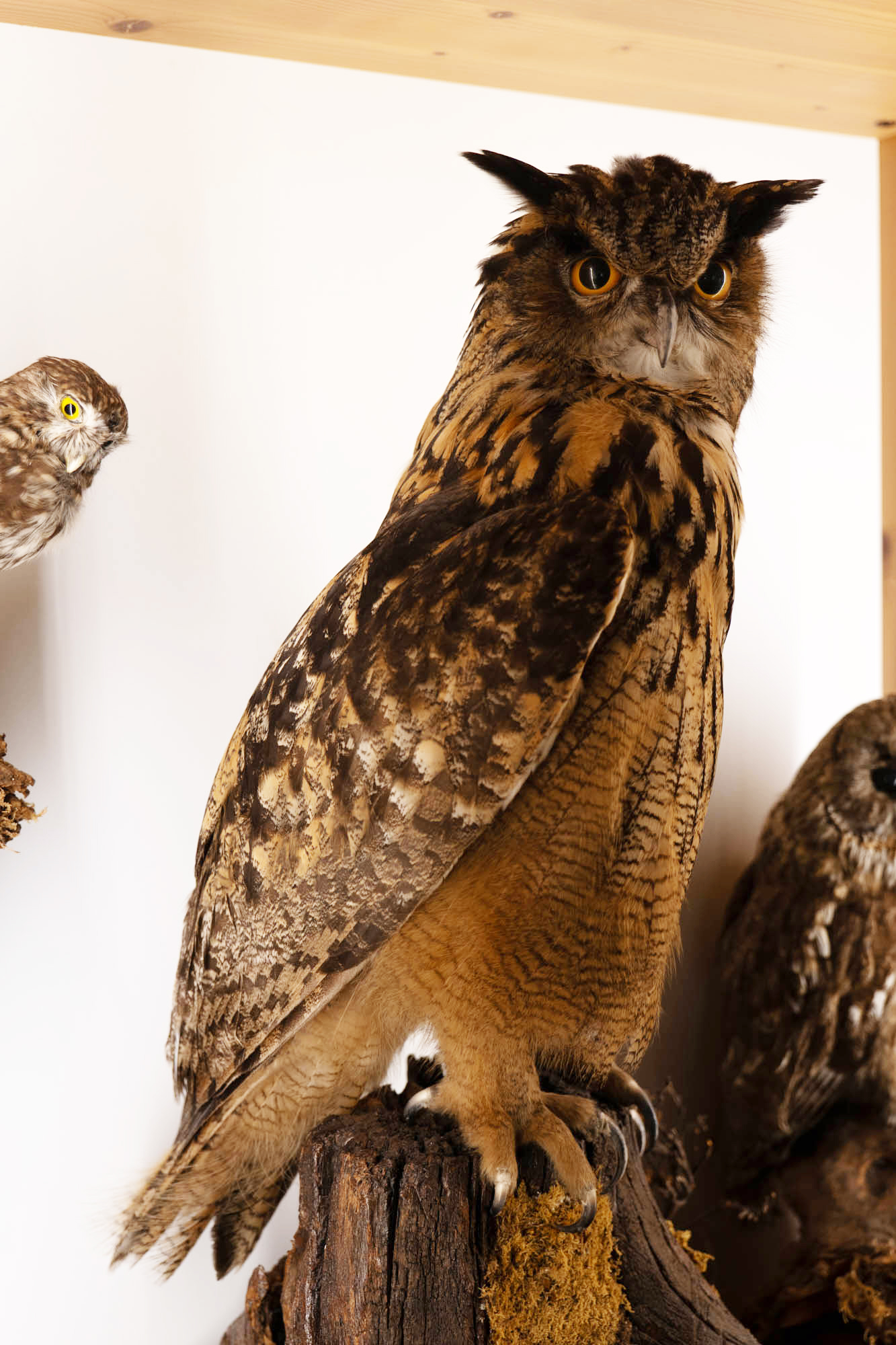
This robustly-built bird is easily recognized by its well-pronounced ear tufts, which are not ears but specialized feathers, and by its streaked plumage in shades of brown, black and ochre, which provides it with excellent camouflage in the wild. The large, deep orange eyes are a distinctive feature of the species and indicate its extraordinary visual ability.
The eagle owl adapts to a wide variety of habitats, from woodlands to rocky areas, but prefers mountainous outcrops and undisturbed forests. It is a versatile and opportunistic hunter, active both day and night, although it prefers twilight and night hours for hunting. Its diet varies according to local prey availability and includes insects, small mammals such as hares and foxes, waterfowl such as ducks, and other galliformes.
The eagle owl's call is deep and evocative: a sonorous "boo...boo" that can be heard at a great distance, while the less frequent shrill cry can be emitted in alert situations. This raptor embodies the power and charm of nocturnal wildlife, remaining a symbol of the biodiversity of the natural areas it inhabits.