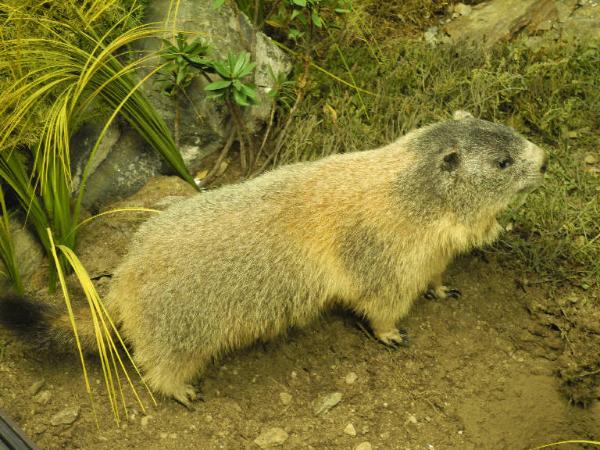
The Alpine Marmot is the largest rodent in the Alps and is distinguished by several adaptations to life in high mountains. This animal has a robust body designed for digging tunnels in alpine grasslands. The marmot's head is short and rounded, with small ears and a short, pointed snout equipped with vibrissae (sensory bristles) that help it orient itself in its environment.
The groundhog has 22 teeth, a feature that, together with its bone structure and musculature, enables it to gnaw effectively. Its eyes, placed sideways, give it a wide field of vision, which is useful for spotting predators.
Fur color varies from grayish-brown, becoming darker with age, with a tawny-blackish back and fawn-yellowish sides. Moulting occurs in spring and is unique. The tail is very voluminous, covered with thick hair, while the forelimbs feature only four toes, as the marmot lacks a thumb.
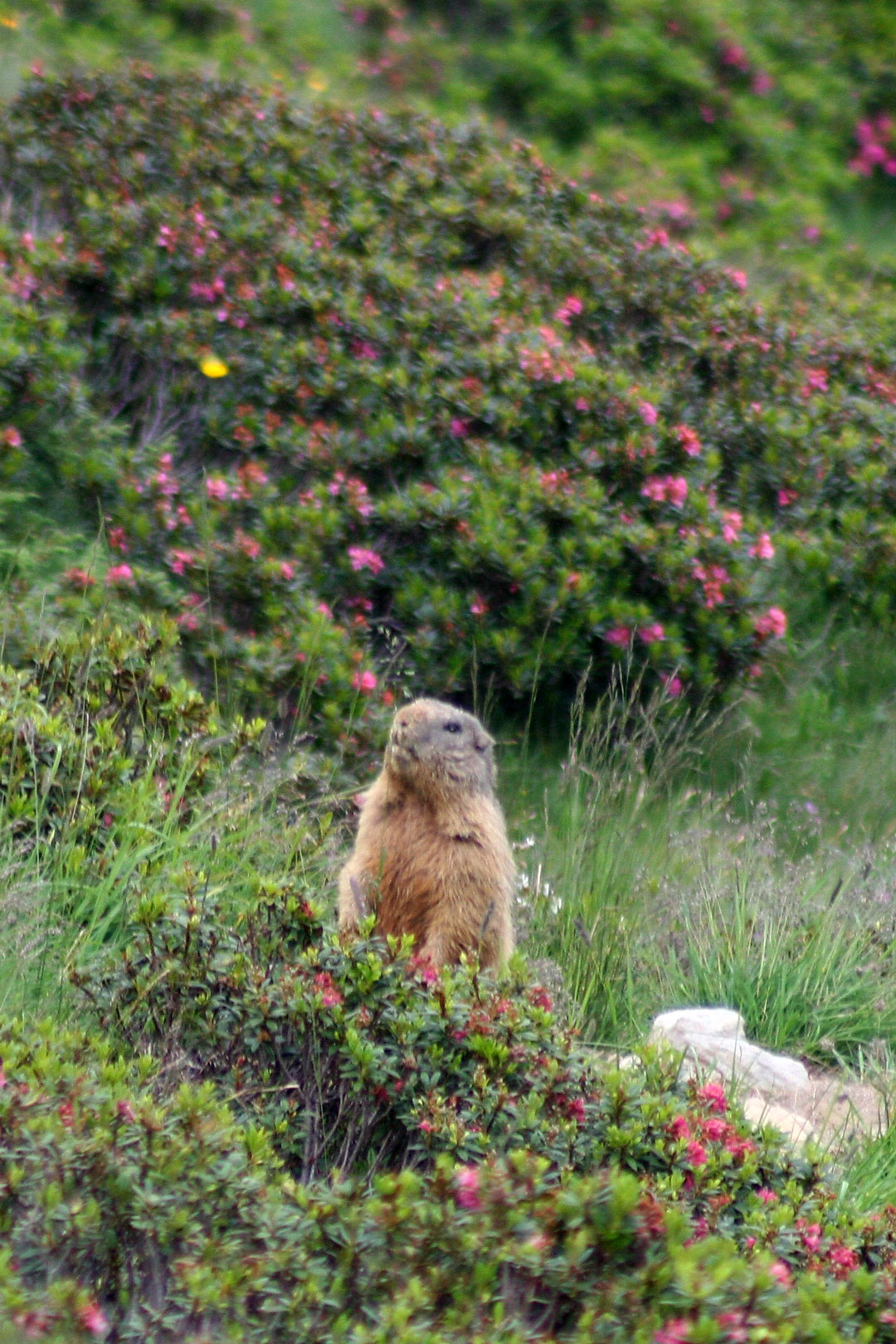
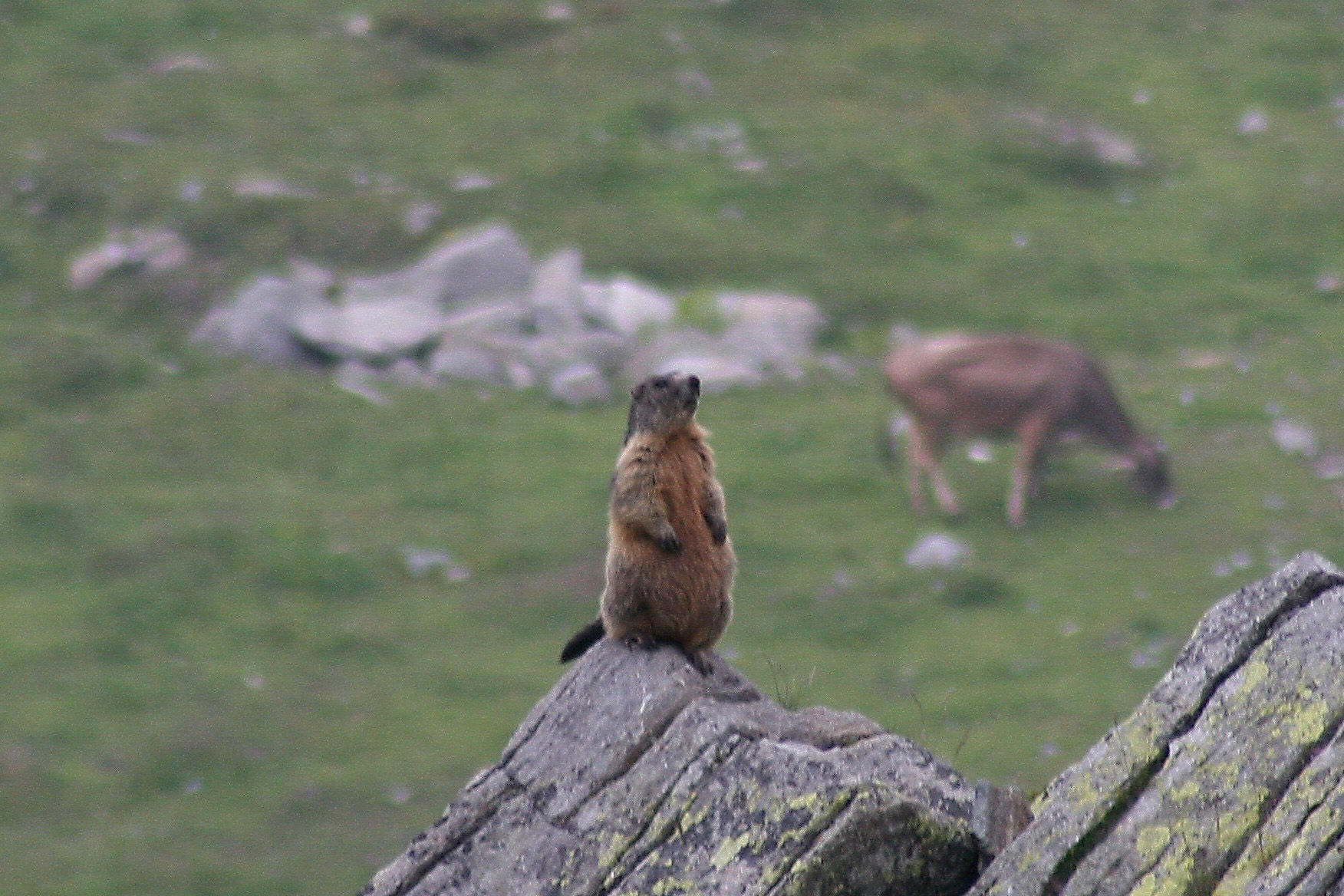
This rodent is perfectly adapted to living in high-altitude grasslands, where it builds complex underground tunnels to shelter from predators and the elements.