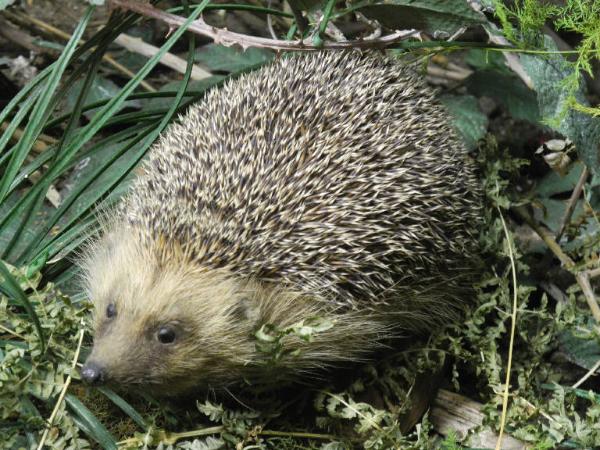
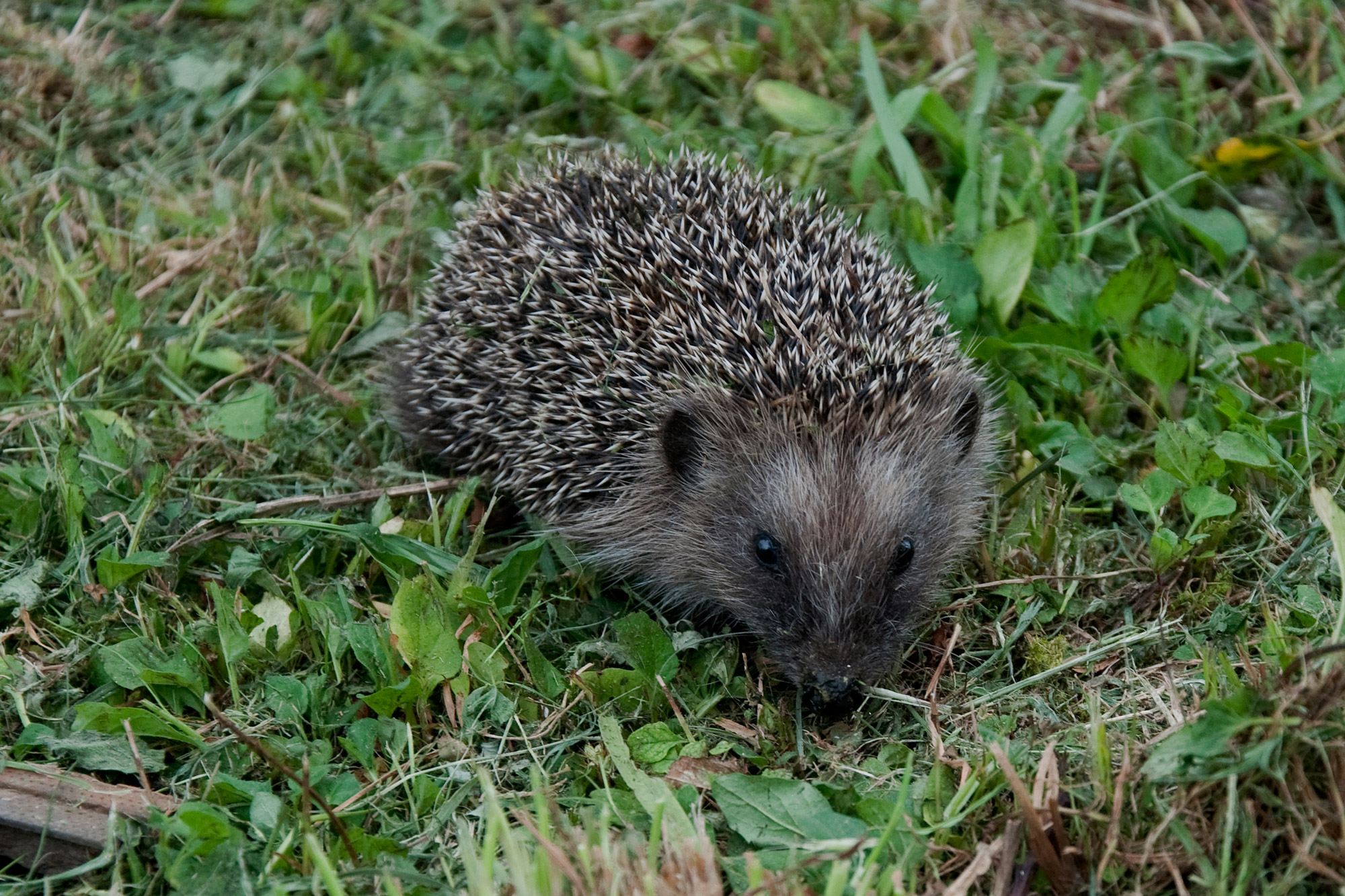
The Common Hedgehog is a small mammal with a compact, rounded body, with a length of about 20 to 30 cm and a weight ranging from 400 to 1,200 grams. Its characteristic appearance is given by the presence of spines (which are modified hairs), which cover the back and rear of the body, acting as a defense against predators. The snout is long and pointed, with a very mobile black truffle, while the head is small compared to the body.
The hedgehog has an elongated skull with a relatively small brain, where the predominant sense is the sense of smell. Its sense of smell is highly developed, thanks to a large truffle and constantly moist olfactory channels. In addition to its sense of smell, the hedgehog has a good sense of touch and can perceive high-frequency sounds, which helps it in its search for food. Its eyesight, however, is limited, being able to see at a distance of about 30 m during the day and 12 m at night. Its ears are small and partially hidden by fur.
The body of the hedgehog is squat, with a pointed snout and a rounded back. The legs are short and strong, and the hedgehog has 5 toes on each foot, with pointed nails that allow it to dig easily and move nimbly. Its footprints are easily distinguishable between front legs and hind legs.
The hedgehog's spines are one of its main distinguishing features. Each hedgehog can have up to 6,000 spines distributed along its back and sides. These spines vary in color throughout the year: they become browner in winter and lighter in summer. The spines are hollow and pointed, with a flexible structure that allows them to absorb shock. When the hedgehog is threatened or excited, the muscles at the base of the spines contract, erecting them and creating a protective barrier.
The hedgehog's fur is generally gray-beige, but changes color depending on the season. In areas without spines, such as the snout, ears, legs, and nose, the skin is black.
The hedgehog is mainly nocturnal and feeds on insects, snails, worms, small fruits and roots. During autumn, it goes into hibernation, which can last until the following spring, taking refuge in burrows or underground. This behavior helps it survive harsh winters, as it is an animal unable to store large amounts of body fat.