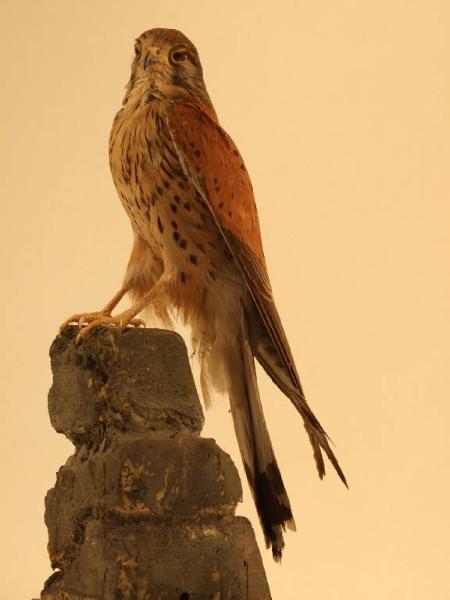
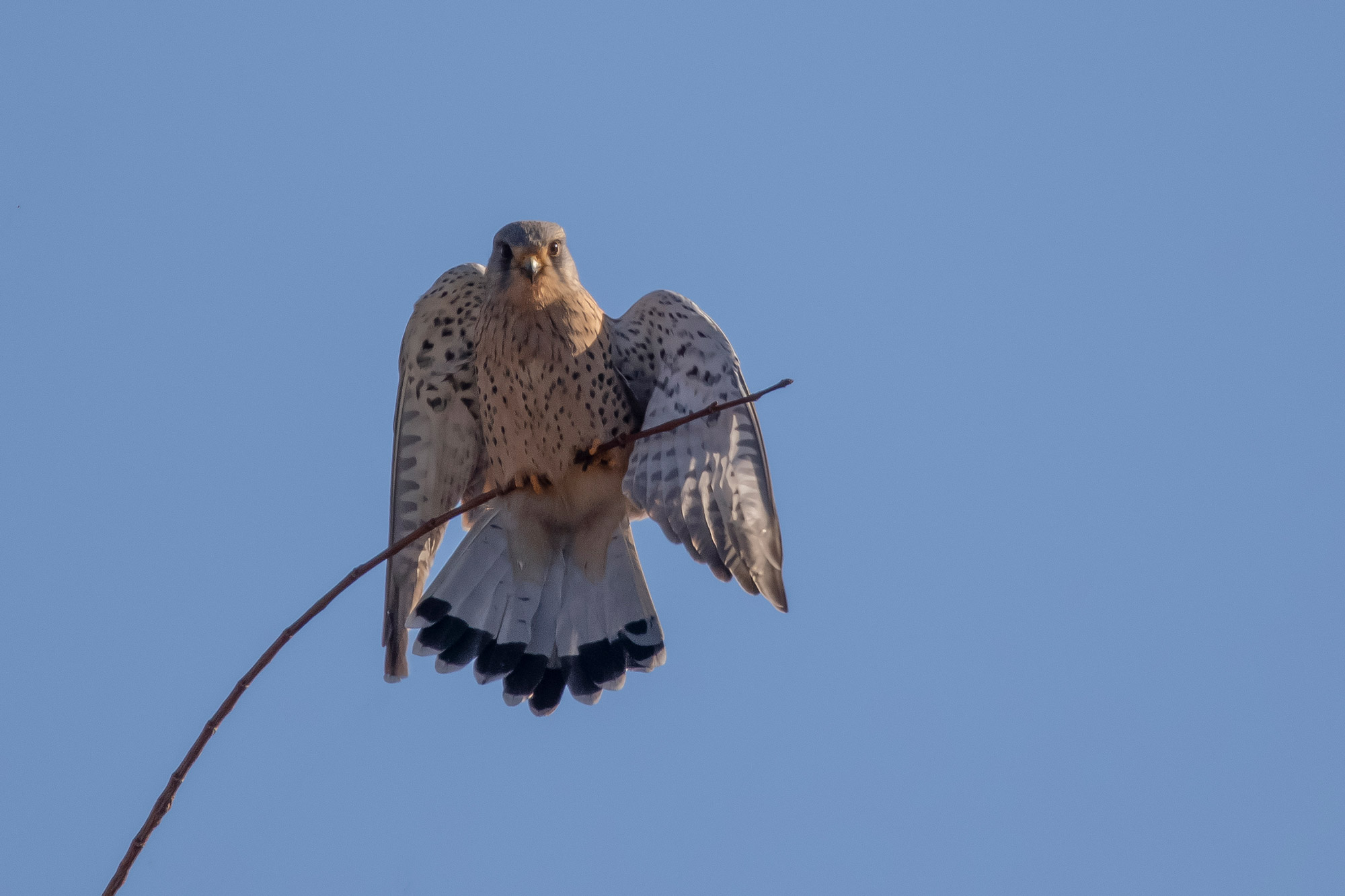
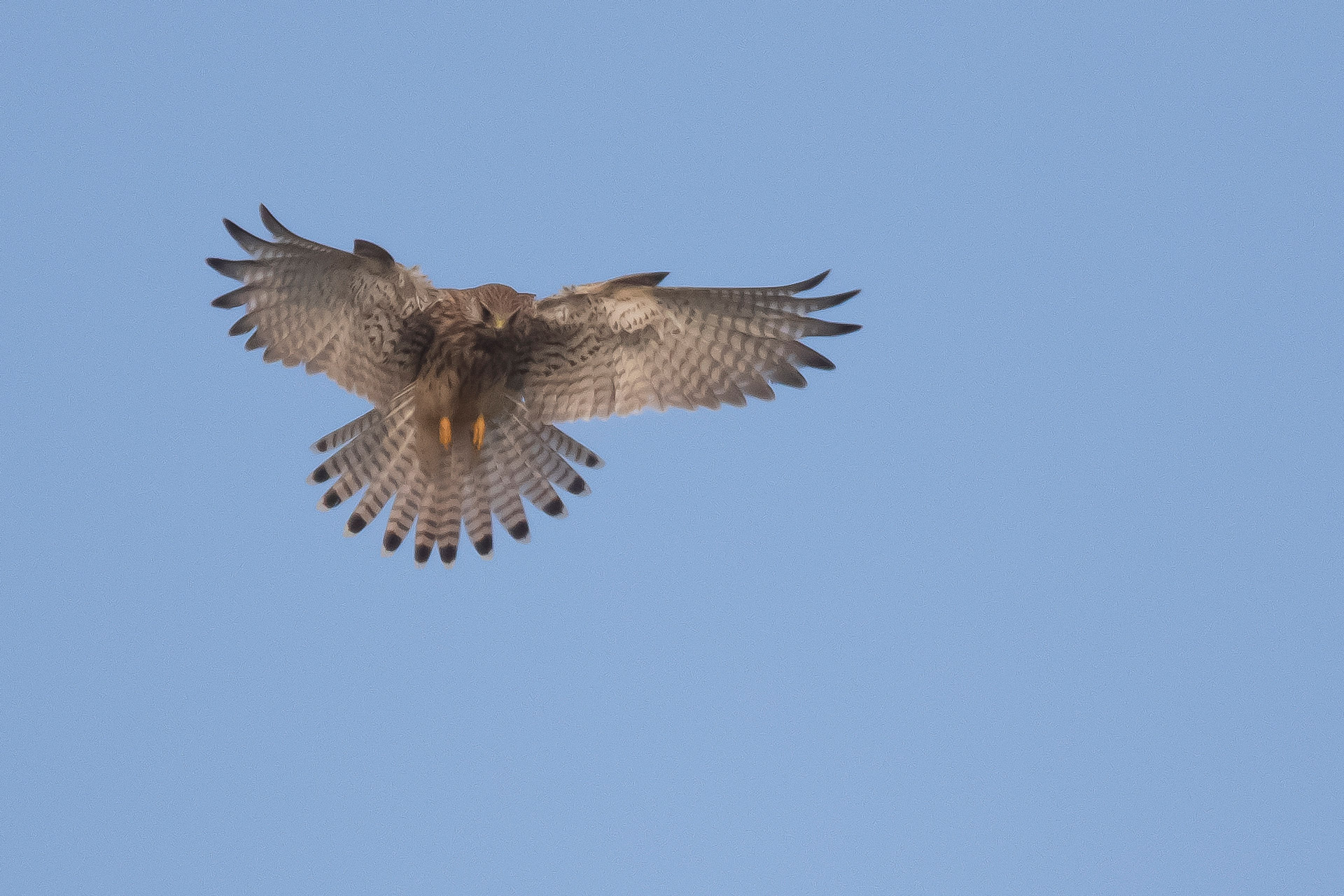
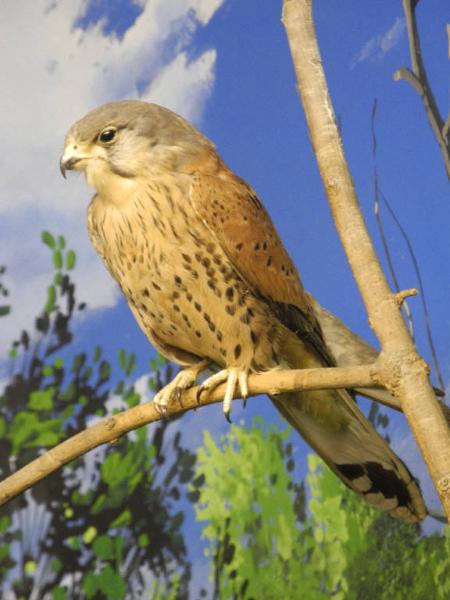
The Kestrel is a medium-sized hawk belonging to the family Falconidae. Its length varies between 33 and 39 cm, with a wingspan of up to 74 cm. The average weight of an adult kestrel is around 150-200 grams. Its body is jointed and slender, with a long, pointed tail that distinguishes it from other hawk species.
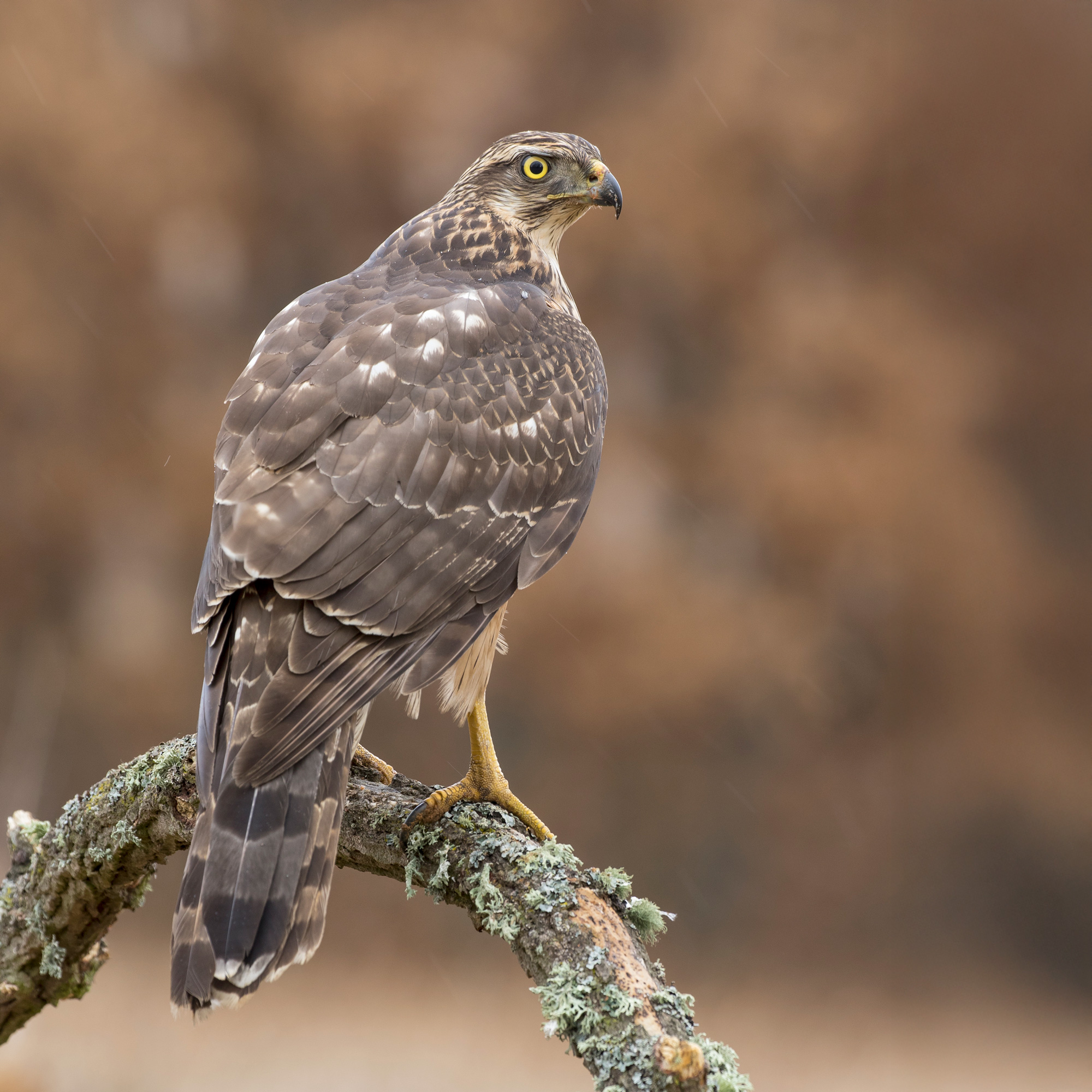
The male has distinctive plumage, with a bright blue-gray back and wings, while the lower part of the body is grayish-white, usually with black streaks. The breast is paler and has a thin horizontal streak. The beak is small, stout and yellow with a black tip. The face is pale white with a distinctive black mask extending to the eye. The tail is longer and more pointed than in other raptors of similar size.
The female, larger and less conspicuous than the male, has browner and less uniform plumage, with a reddish-brown back and lighter, striped underparts. The face has darker shades and the black mask is less conspicuous.
The kestrel is also easily recognizable by its characteristic hunting behavior in flight, where it often remains suspended in the air (a phenomenon known as hovering), rapidly beating its wings to maintain position and scan the ground for prey. Its diet consists mainly of insects, such as grasshoppers and beetles, but it can also catch small rodents and birds.
The kestrel is found throughout Europe, Asia and North Africa, and is found in a variety of habitats, including agricultural fields, grasslands, open areas and urban areas. In urban areas, it has become a common presence, where it often nests on buildings, towers and man-made structures. During the breeding season, the female generally lays 4 to 5 eggs, which incubate both parents for about 30 days.
This raptor is known for its bold behavior and adaptability to human environments, often seen flying over meadows and roads in search of food. Its population, however, can fluctuate due to loss of natural habitat and changes in land use.