The Ptarmigan is a galliform bird belonging to the Tetraonidae family. Approximately 40 cm in length, it is distinguished by its toes covered with dense feathers that extend to the nails, an adaptation that allows it to move easily over snow. The ptarmigan is a sedentary species, living in the cold mountainous regions of the Northern Hemisphere, such as the Alps, Pyrenees, Lapland, Scotland, Norway, and parts of North America.
There are several subspecies of the ptarmigan, including Lagopus mutus (or lagopede of the Alps), which prefers the high mountains of Europe, and Lagopus lagopus (northern ptarmigan), which is widespread in North America and the colder regions of Eurasia. Its diet consists mainly of buds, leaves and fruits, which it searches for in the valleys during the winter season, particularly in places protected from snow.
The ptarmigan is hunted, practiced with the aid of hounds, in difficult environments such as scree, inaccessible rocks and rugged terrain. The ptarmigan's behavior is very cautious: at the slightest sign of danger, the bird may suddenly take off and seek refuge in hard-to-access places to avoid capture.
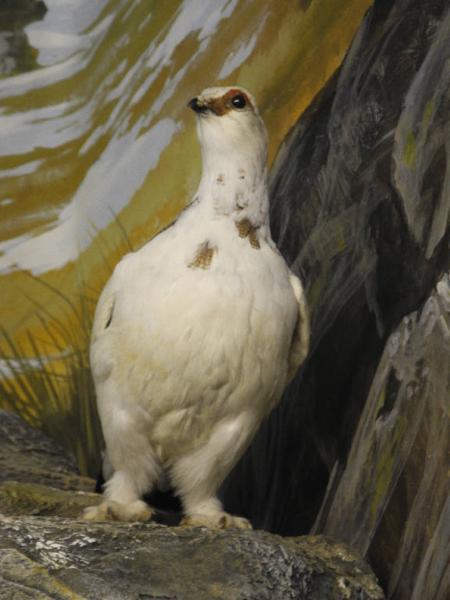
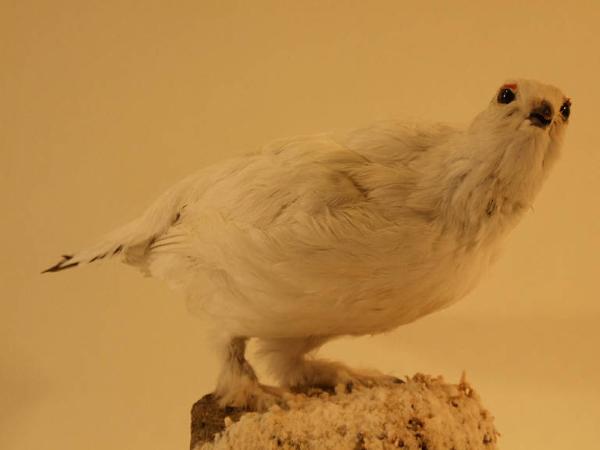
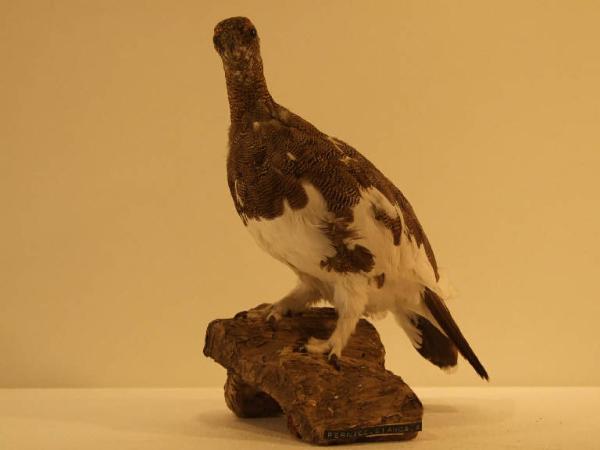
It is the only pigeon-sized alpine bird to have entirely white wings; in summer the rest of the body is gray or brownish, while in winter the livery is totally candid except for the black outer tail feathers. The Eurasian spring male has grayish upper parts with white wings and white underparts. In flight it resembles a pigeon, with rapid wing beats alternating with short glides; on the ground the silhouette is made relatively slender by the long neck and tail, often held up; the legs are very short. From November to March the plumage is entirely candid, and only in flight are the outer black tail feathers visible.
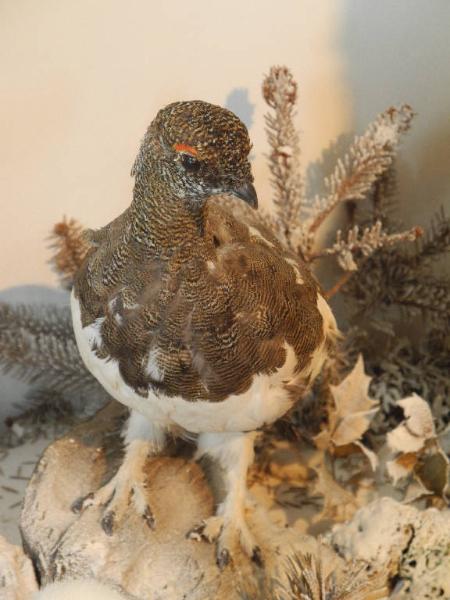
Starting in April, the nuptial dress is assumed: the male has a blackish breast and grayish-brown upper parts, the female is yellowish-brown barred with black, while both sexes retain white wings and belly. The brownish-gray summer dress is gradually changed into the winter livery from September onward.
Seen from a short distance, males show a black streak between eye and beak and red caruncles above the eyes (much reduced in females).The feet are entirely feathered and in winter form a kind of racket that allows the animal to move easily even in deep snow. North American birds are more varied and generally browner but in some populations in the Aleutians almost entirely black. In winter the plumage of both sexes turns completely white except for a black tail. They can be distinguished from northern winter ptarmigan by their habitat, smaller size, more delicate tuft and, in the winter male, black between the eye and beak.