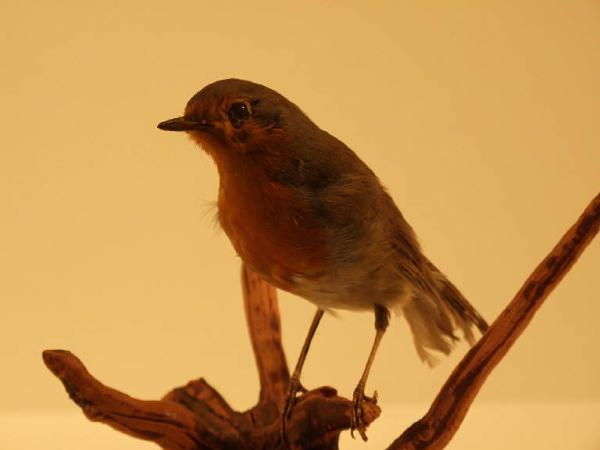
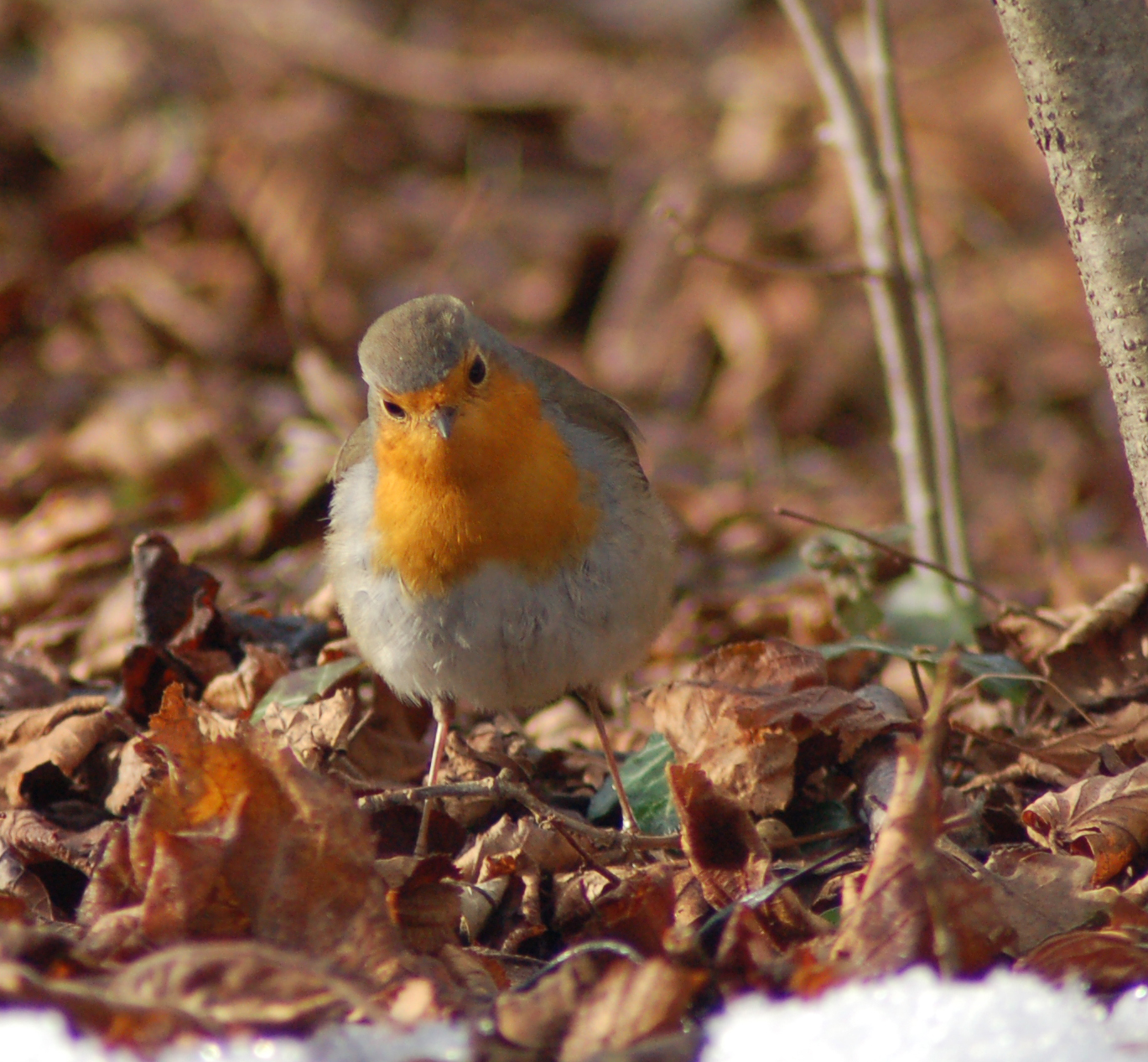
The Robin is a small European songbird, very common and easily recognized by its distinctive orange-colored breast and forehead. Although small in size, the robin is known for its lively and swaggering behavior. It feeds mainly on insects, which it seeks on the ground, but it does not disdain catching insects in flight as well. Young specimens do not have the typical orange breast, but are speckled with duller shades.
This species has a confiding behavior toward humans, often approaching during garden work or when soil is turned over, to look for worms and insects that come to light. In winter, the robin may also feed on fat and seeds, although these are not its main diet.
The robin is a short-range migrant, present in Italy during winter in low-lying areas, while it is regularly found in mountain areas, where it winters at high altitudes. Despite its tame appearance, it is an extremely territorial and aggressive bird toward its peers and other small species. When confined to the same space, male or female robins may engage in violent fights, sometimes to the death of one or both contenders.