The Pheasant is a medium to large bird, ranging from 70 to 80 cm in length in males and about 60 cm in females, and weighing up to 1800-1900 grams. Its size is comparable to that of a medium-sized domestic chicken. Plumage variability in males is considerable, especially in areas where the species has been introduced for hunting purposes, due to crossbreeding between different subspecies and releases of individuals carrying mutations. These crosses with related species, such as the Green Pheasant (Phasianus versicolor), have made it difficult to define the extant subspecies, since the characters of geographic isolation necessary for precise classification have disappeared.
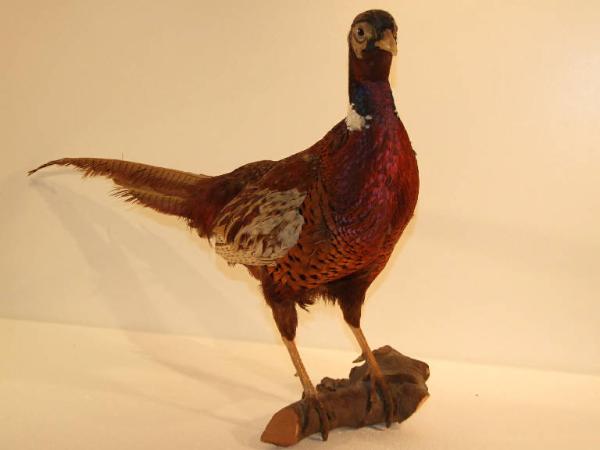
The male has very striking plumage: the head and neck are iridescent dark green, with an area around the eye and bare, carunculate cheeks with pendulous wattles. The feathers of the rest of the body vary from yellow ochre to brownish-brown, with black hemlines creating distinctive patterns. The rump may be blue-gray or brown, depending on the group to which it belongs. The wing coverts and remiges are earth-gray or isabella with blackish-brown barring, while the long, pointed rectrices are golden-brown with transverse black bars.
Females, on the other hand, have very cryptic, earth-gray plumage with brown and blackish barring, which helps them blend in during hatching. Their tails are also about a third shorter than those of males. The pheasant's gray legs are relatively long and give the animal its characteristic gait. In males, a well-developed spur is present on the back of the tarsus.
The common pheasant has a wingspan of about 90 cm. Its short, rounded wings are not suitable for long movements and produce a characteristic swoosh during flight. The latter is heavy and straight, but generally very low. Like all phasianids, the pheasant's flight is not particularly active: after a great leap, the bird prefers to glide away from danger, using its agility to move quickly at a distance.
The common pheasant is a sedentary or partially migratory species, preferring open environments such as fields, forests and agricultural areas. Its diet consists mainly of seeds, berries and small invertebrates. During the courtship season, males emit a distinctive call and sport their bright plumage to attract females.